BlazeMultiPhysics:
From atoms to particles, solids and fluids.

True convex polyhedra with volume based contact, SPH fluids and melts, bonded Elements that crack, and CFD coupling, all native on the GPU. Models train on the live simulation through our CUDA bridge, and the solver physics self heals their predictions.
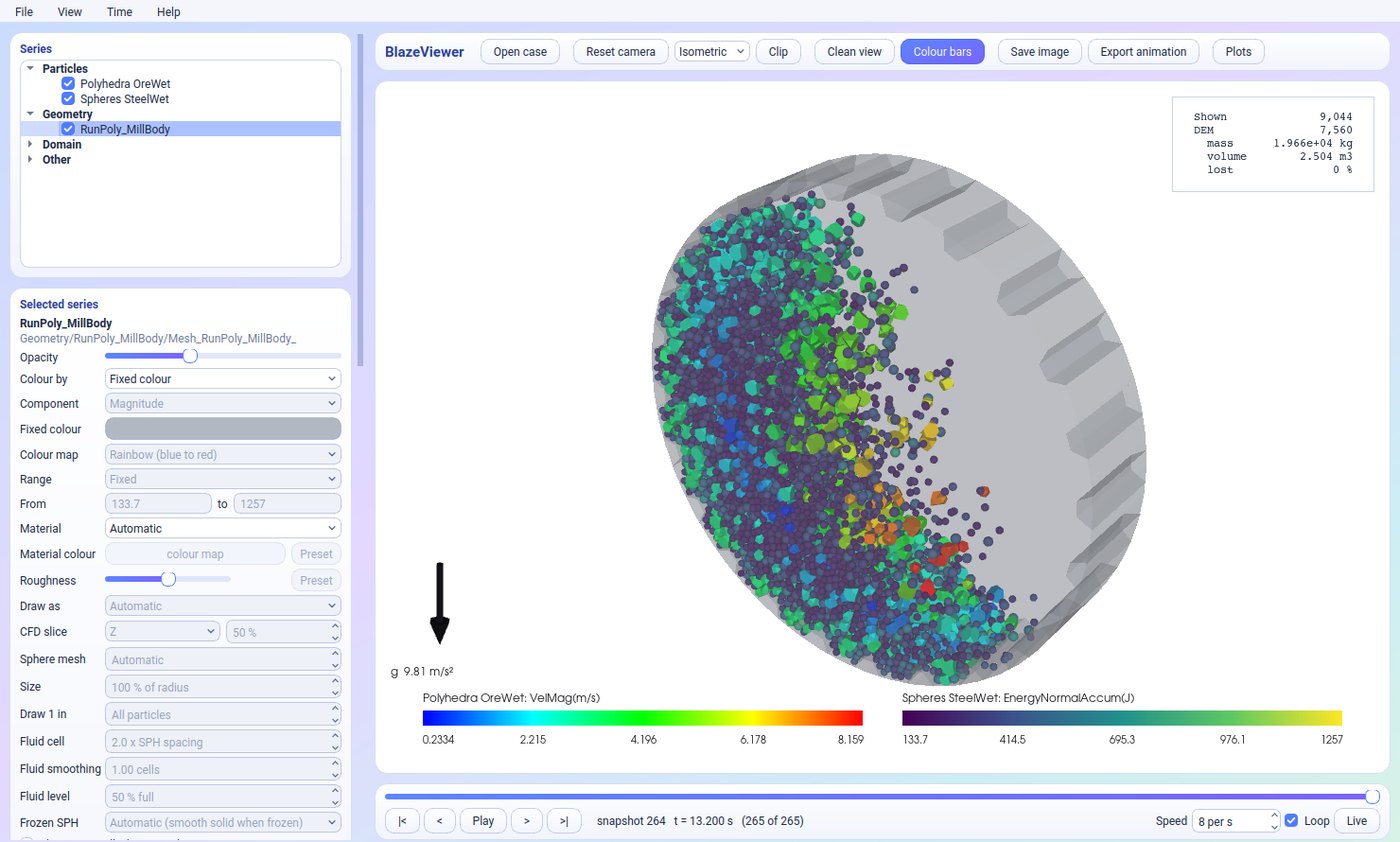
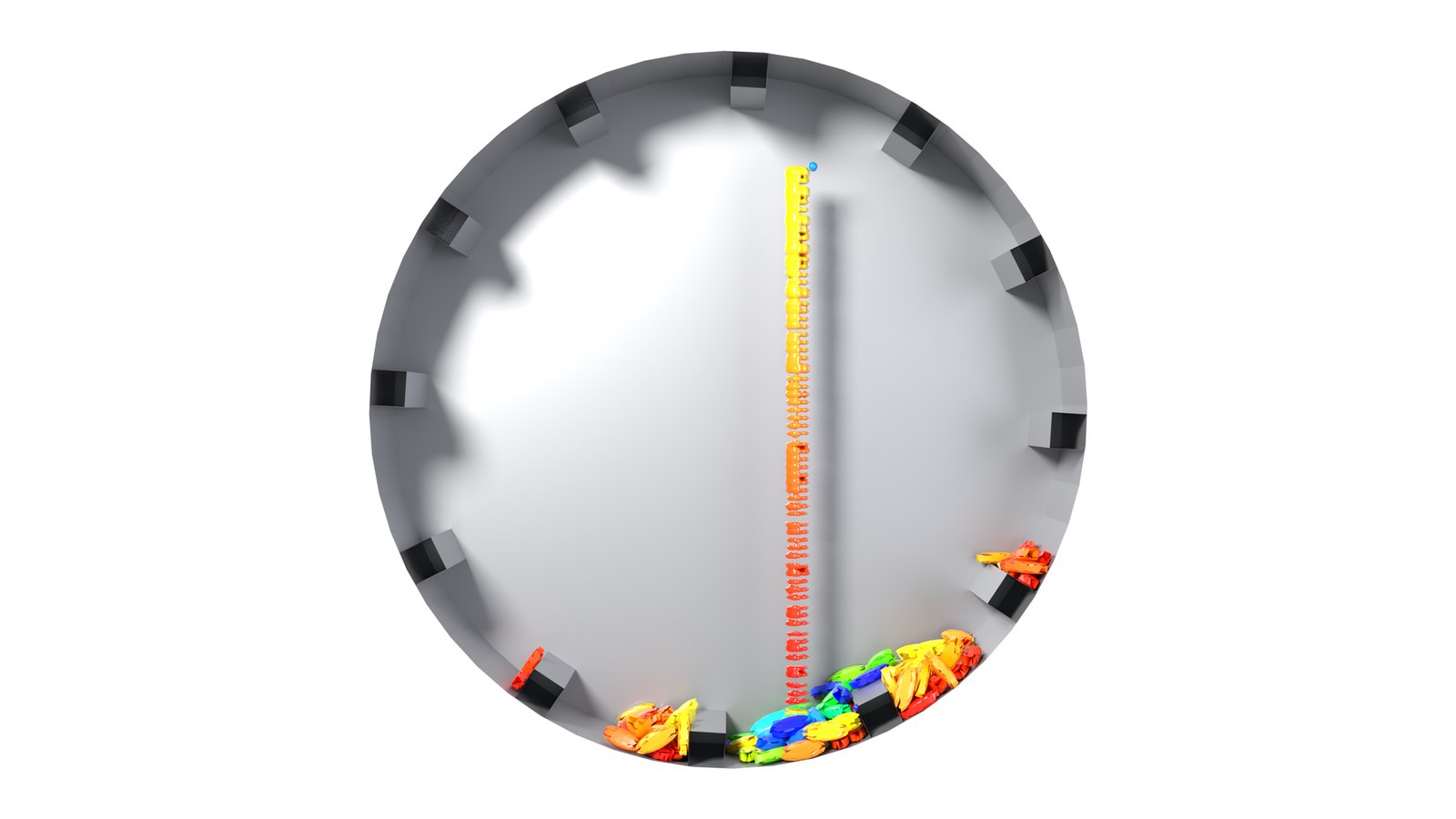
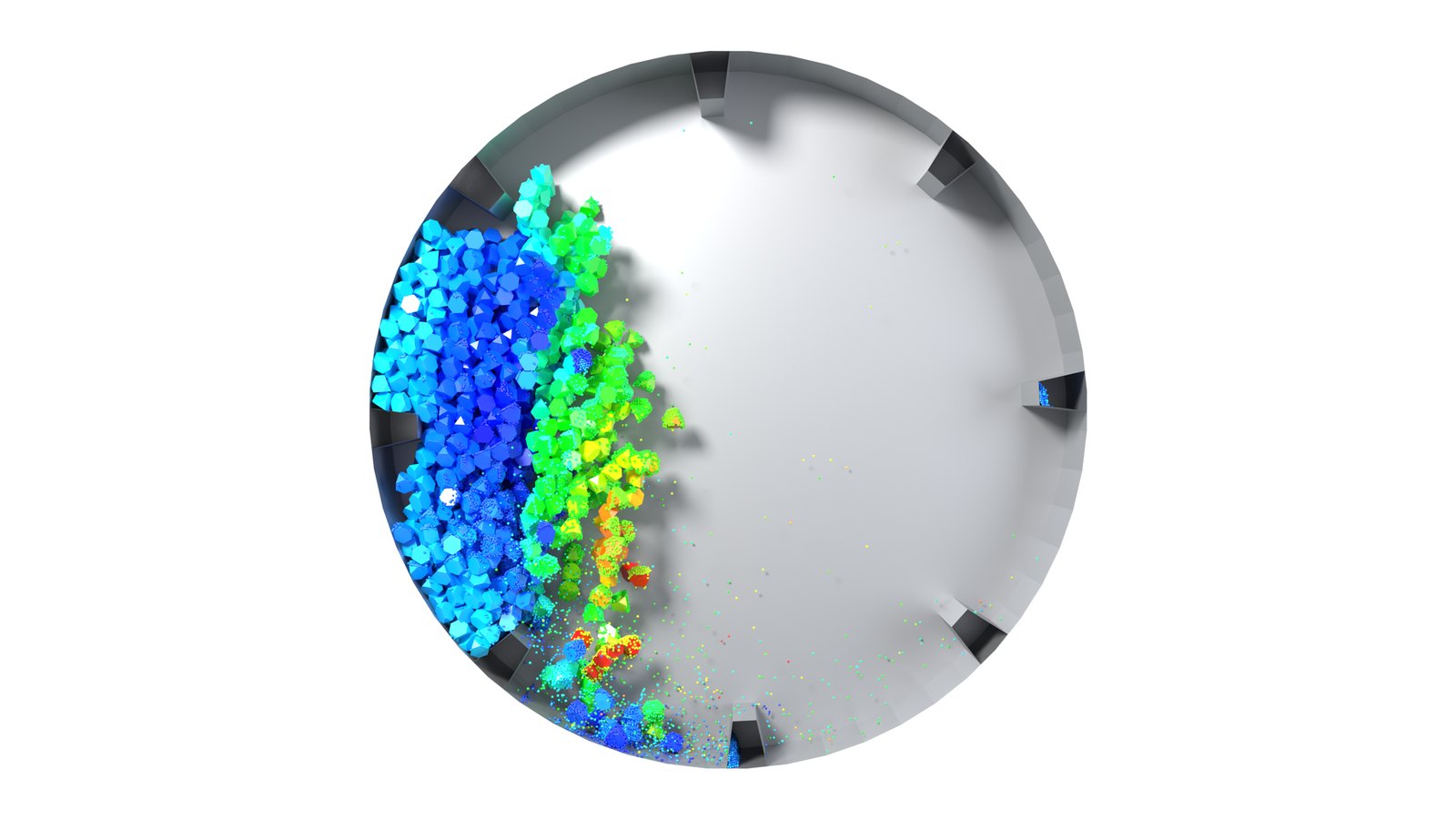
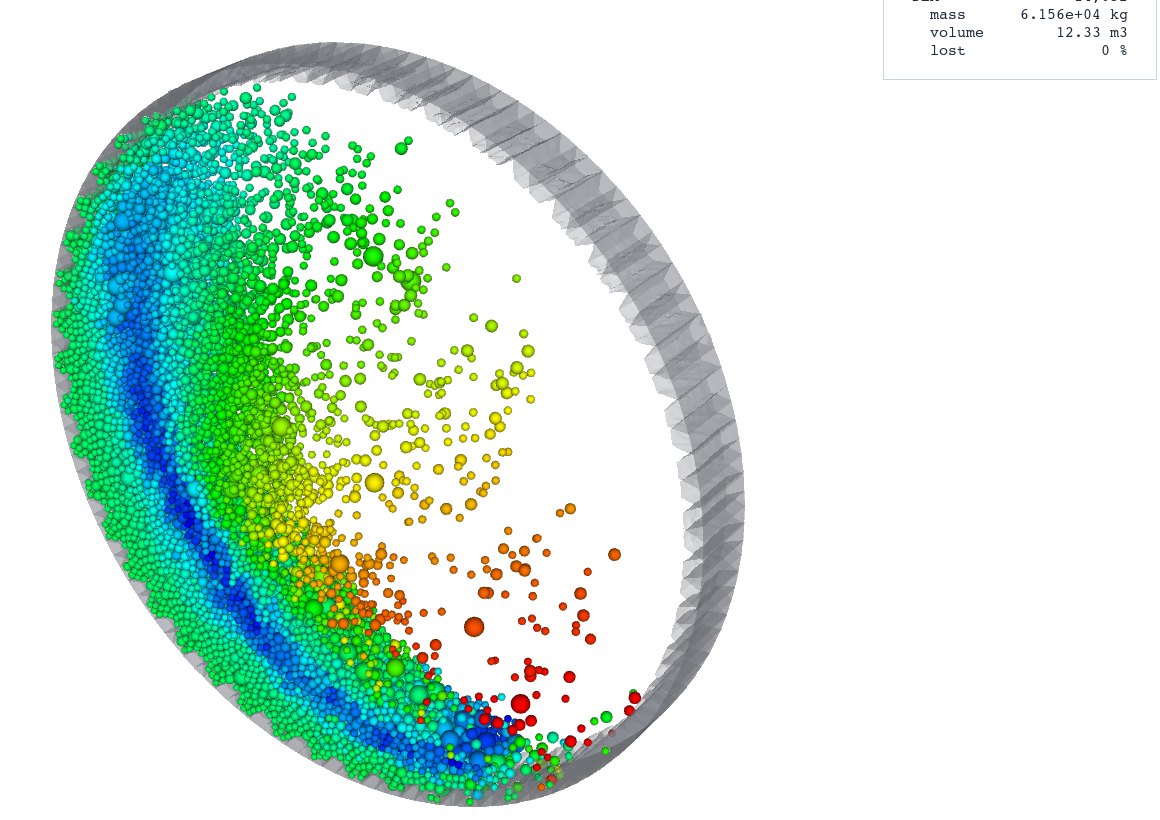
BlazeViewer showing a mill charge of polyhedral ore and steel balls
BlazeViewer every result in one scene
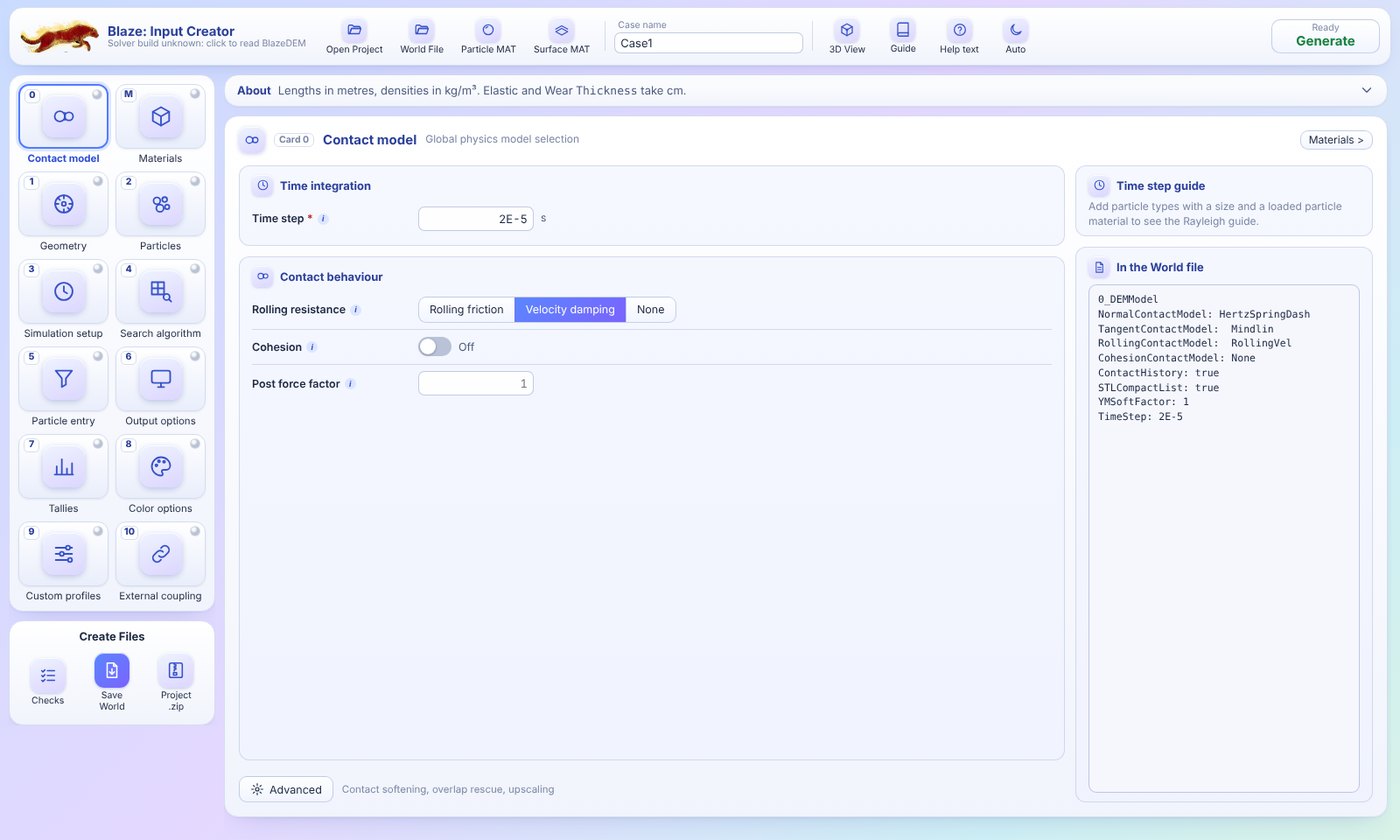
BlazeMultiPhysics Input Creator: case setup in the browser
Input Creator case setup in the browser
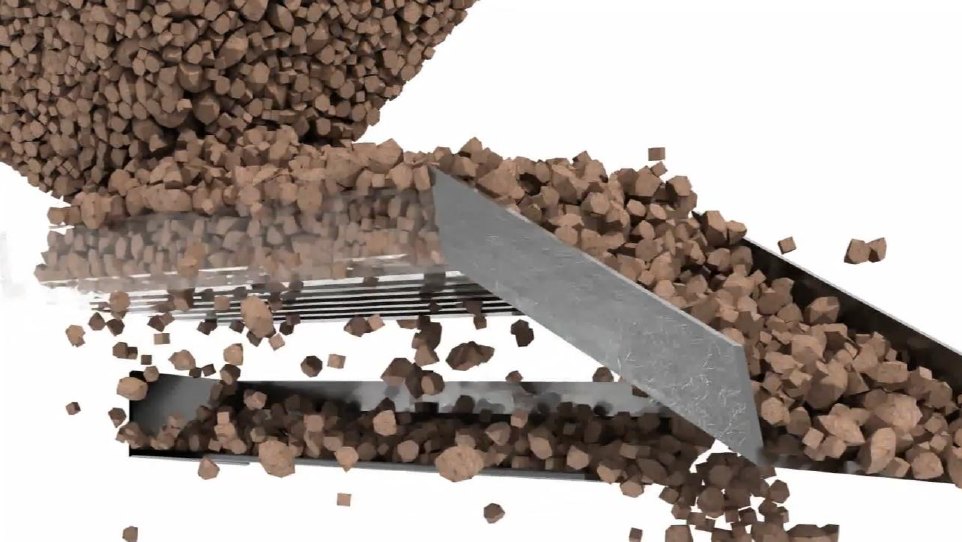
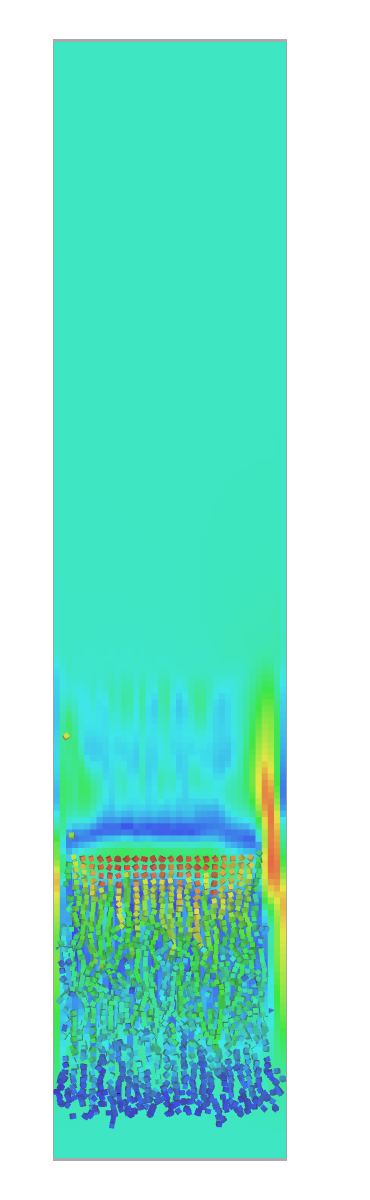
Solver a vibrating grizzly feeder on the GPU
Atomic scale

Atoms

Crystal properties computed with machine learned potentials.

→
Meso scale

Particles

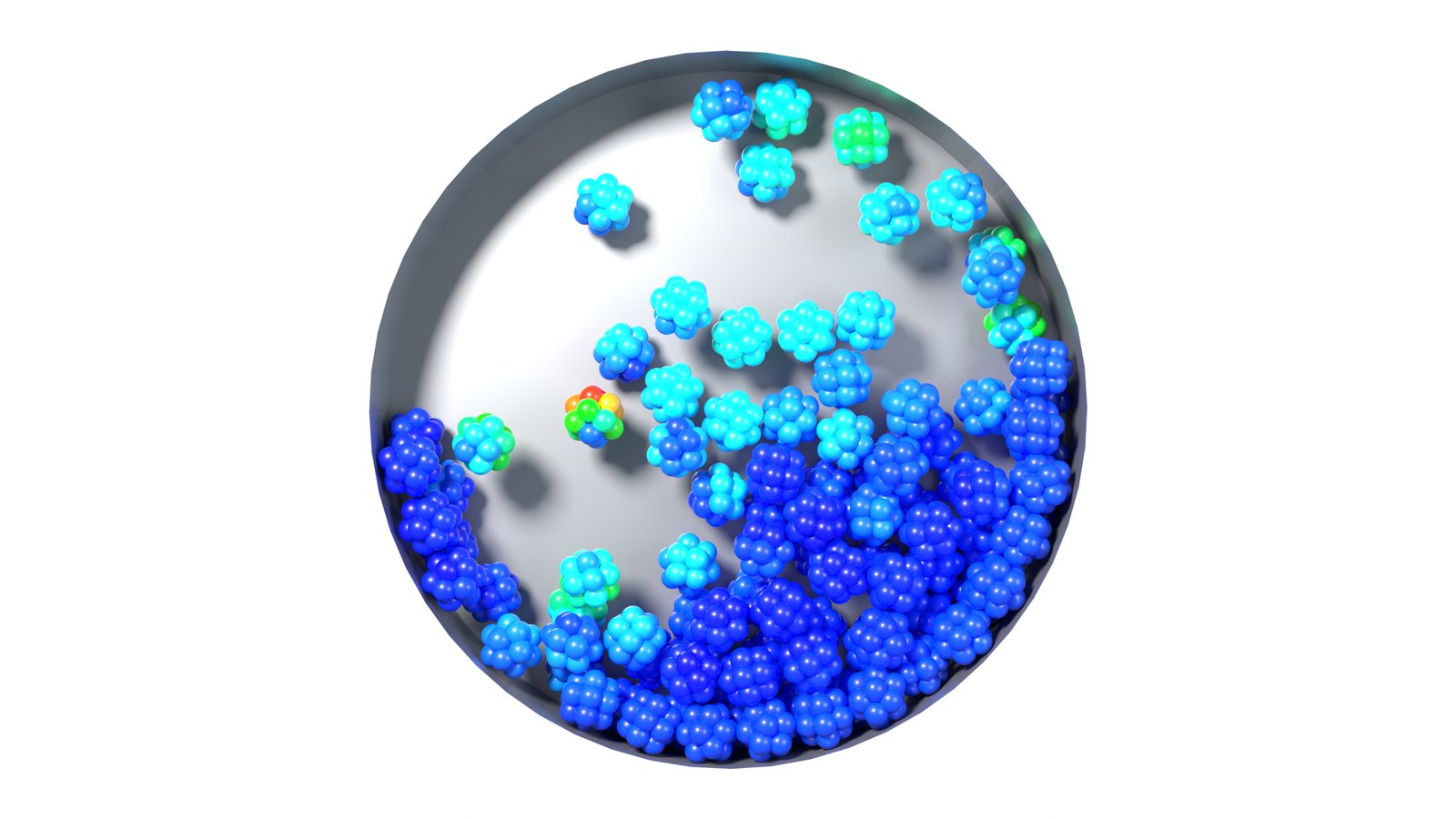
Grains, powders and ore as true polyhedra.

→
Continuum

Solids

Bonded Elements that deform and crack.

→
Continuum

Fluids

SPH and CFD.

One solver, every physics

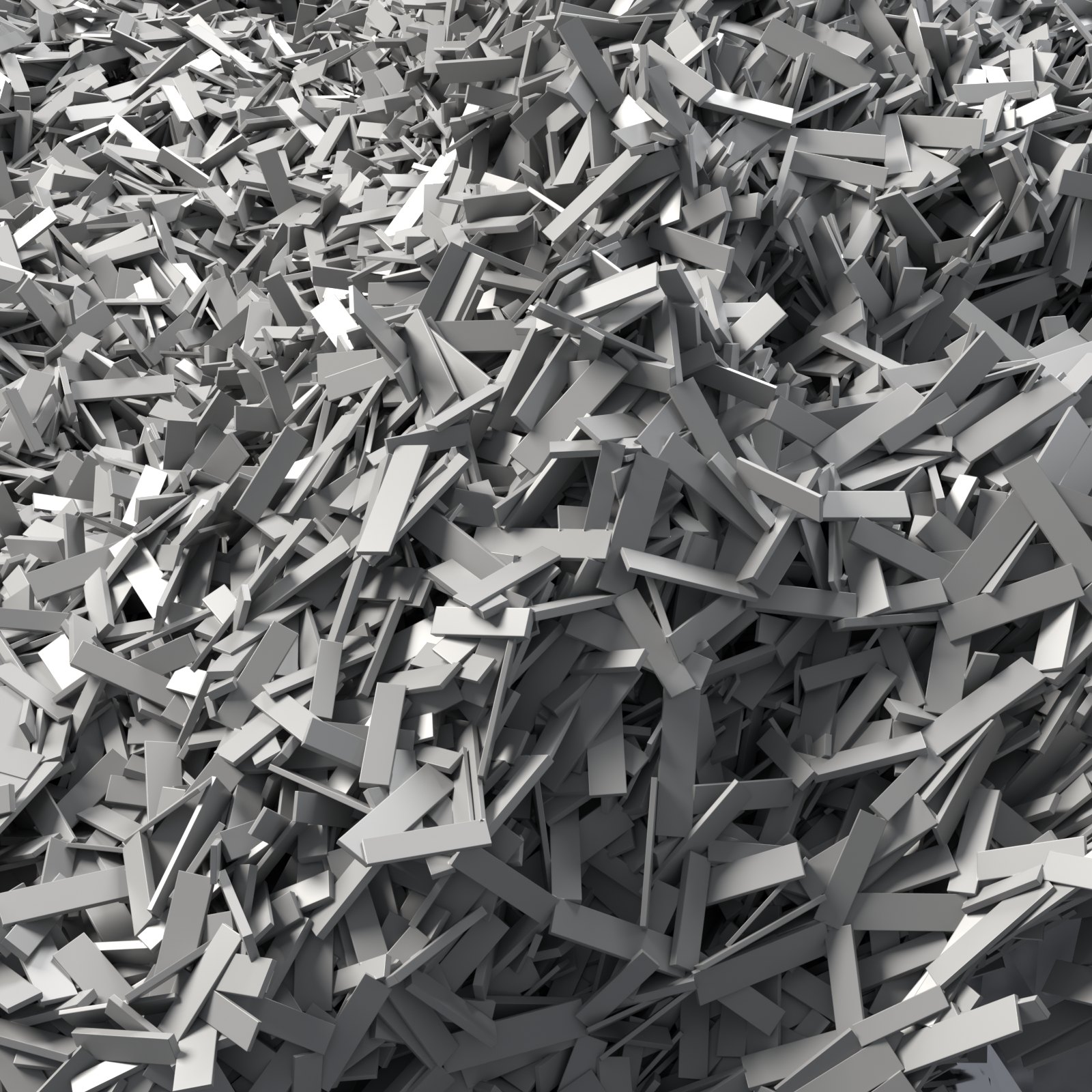
Lath shaped polyhedral particles in a twin screw feeder
Particles

True shapes, real contact

  • True convex polyhedra, not sphere clusters
  • Contact force from the overlap volume of the two shapes (volume based contact)
  • Rigid clumps up to 128 spheres, and flexible clumps
  • Hertz or linear contact, Mindlin tangential, three rolling resistance models, cohesion (Linear, BlazeNonLinear, JKR)
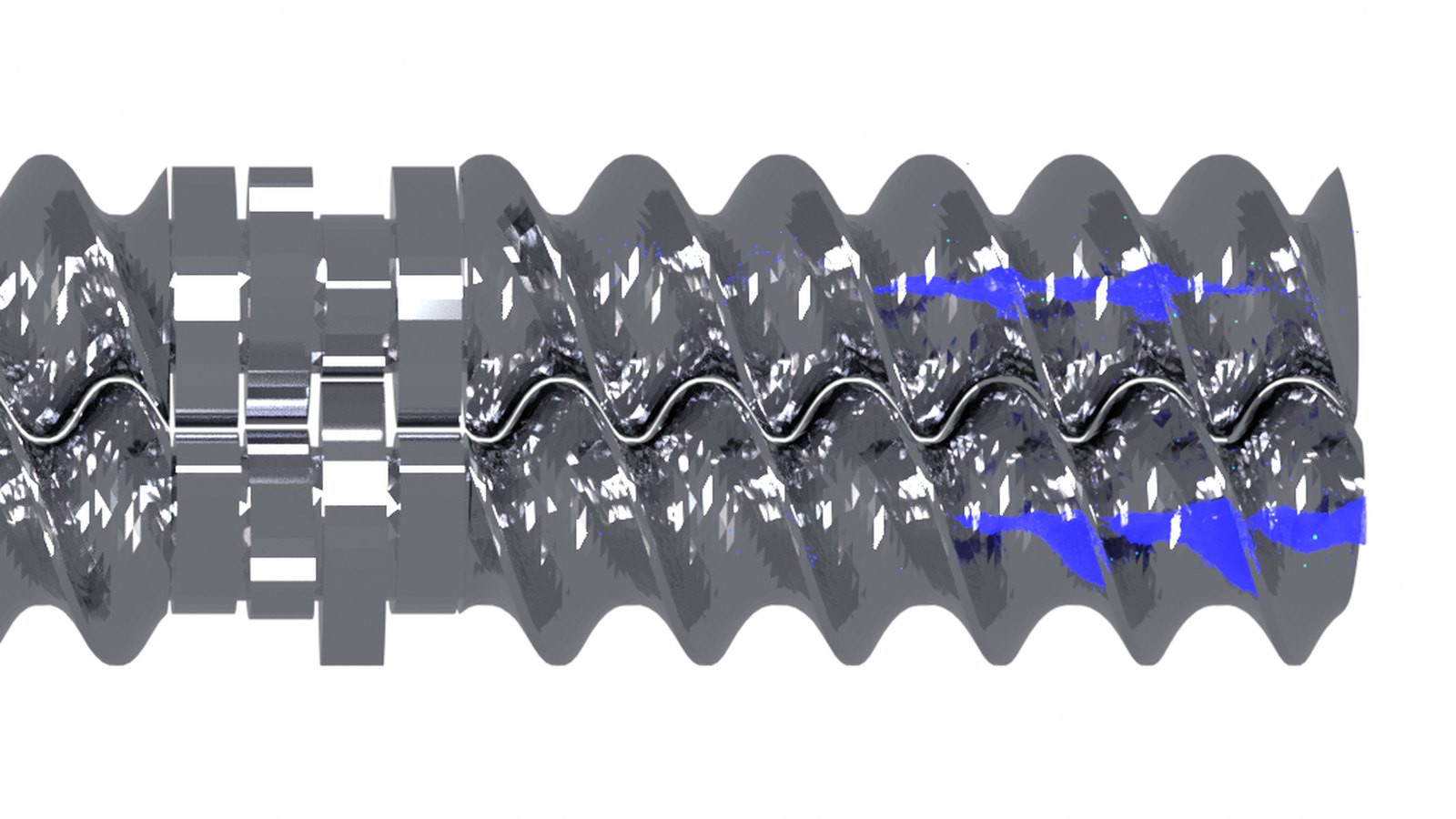
Twin screw extruder with SPH polymer melt
Fluids and melt

SPH liquids and polymer melts

  • Native SPH with two way SPH-DEM coupling
  • Free-surface waves, slurry, inlet and outlet driven flow
  • Polymer melt: power law or Cross-WLF viscosity, Maxwell viscoelastic stress, thermal melting
  • Pellets start as DEM spheres or polyhedra and convert to SPH as they melt
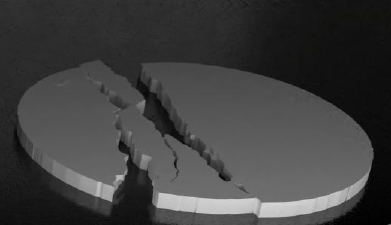
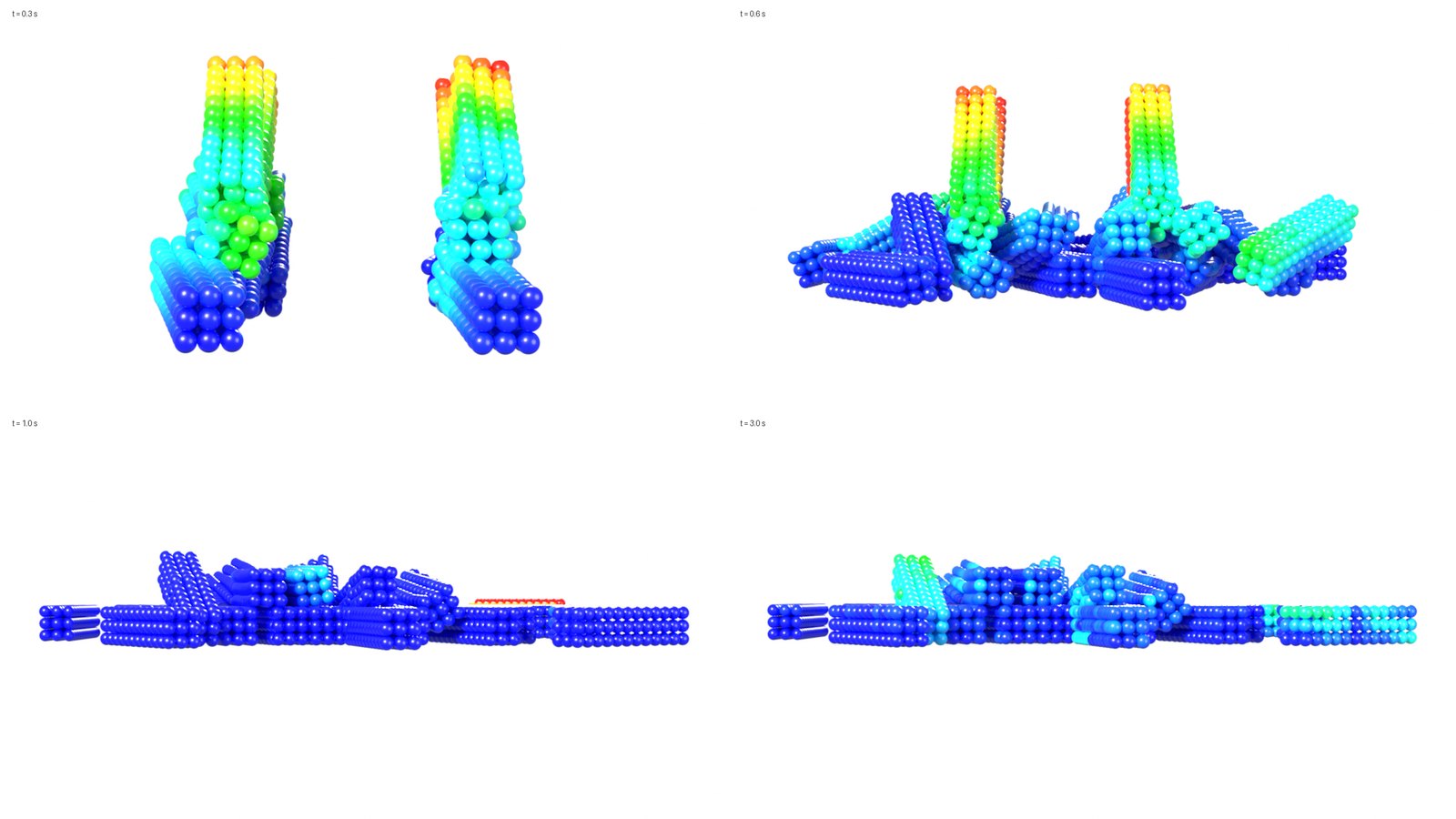
A bonded Element disc cracking into fragments
Solids that crack

Bonded Elements

  • Deformable Element meshes (tet, wedge, hex and OBJ) with vertex and face bonds
  • Cracks follow the bonds into fragments of any shape, over several generations
  • Replacement breakage for spheres and polyhedra (Vogel-Peukert)
  • Elements, clumps and particles run in the same GPU solver
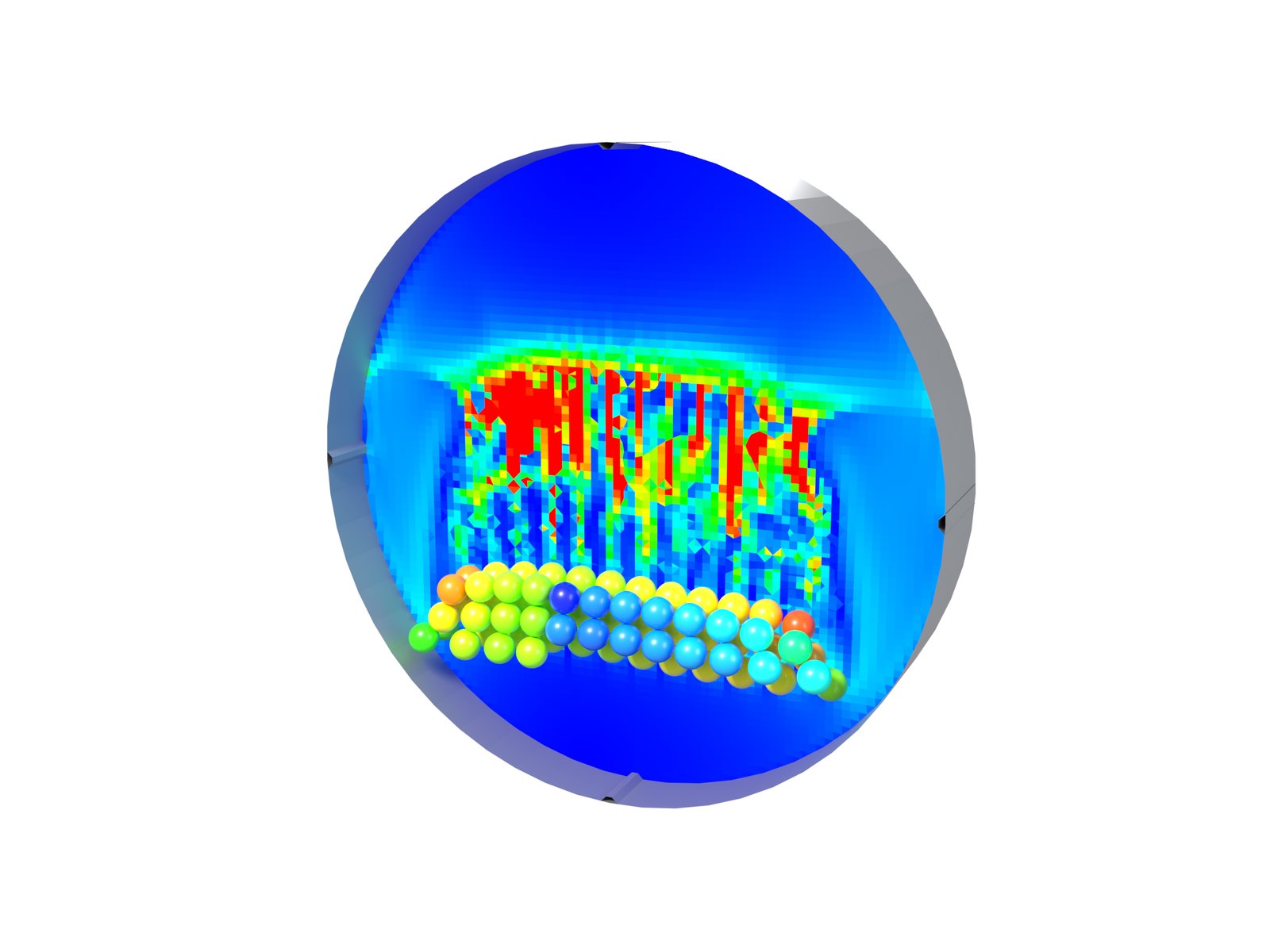
Polyhedral particle fluidised bed with heat exchange
CFD-DEM

OpenFOAM and Kratos

  • BlazeFOAM: two way coupling with OpenFOAM v2606, unresolved (Model A, Model B) or resolved immersed boundary
  • Direct mapping of the DEM onto unstructured meshes, polyhedra in CFD-DEM, parallel (MPI) OpenFOAM, heat exchange; particle to cell mapping on the GPU
  • Kratos: forces, heat and damage exchanged with the Kratos fluid solver every coupling step through a Python coupler
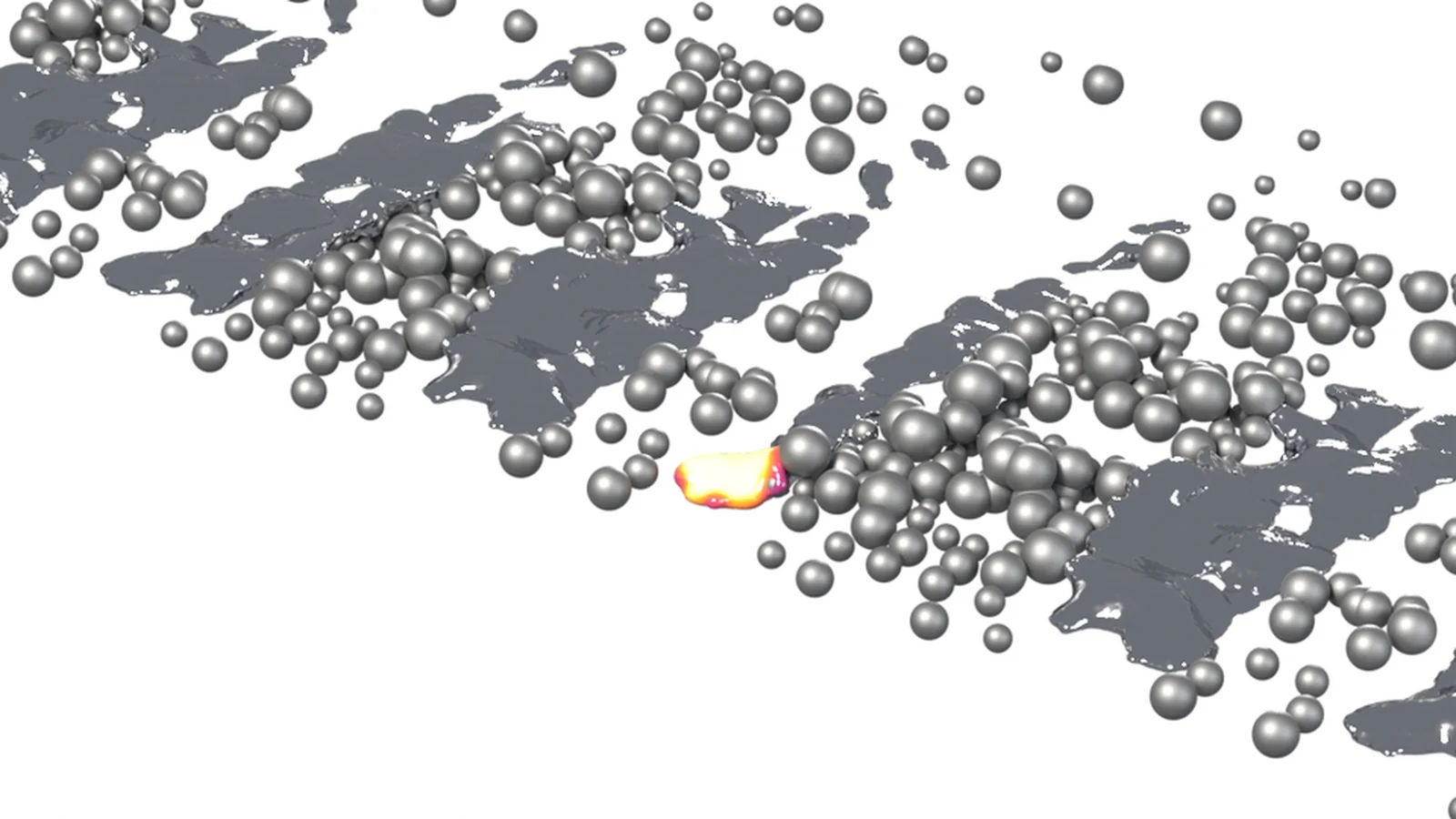
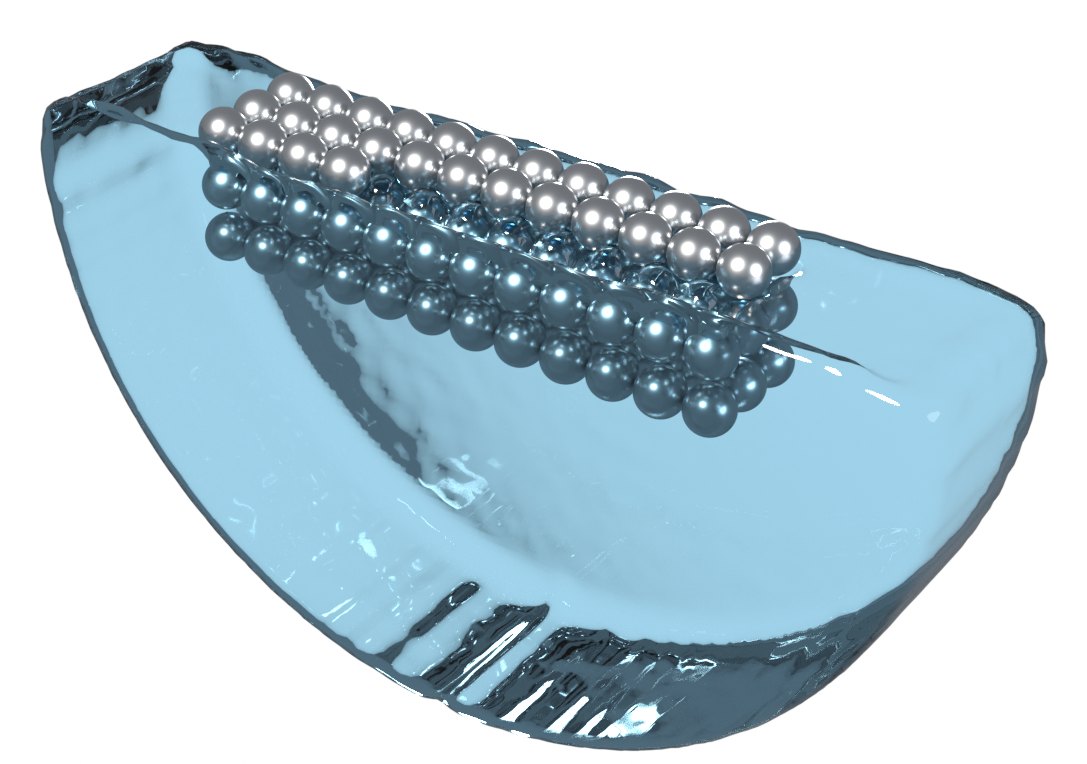
Laser powder bed fusion: powder melting into a liquid metal pool on the current track
Additive manufacturing

Laser powder bed fusion

  • Laser heat input along tracks or hatch patterns
  • Recoater spreading of the powder
  • Melt and solidify, with surface tension, radiation and evaporation
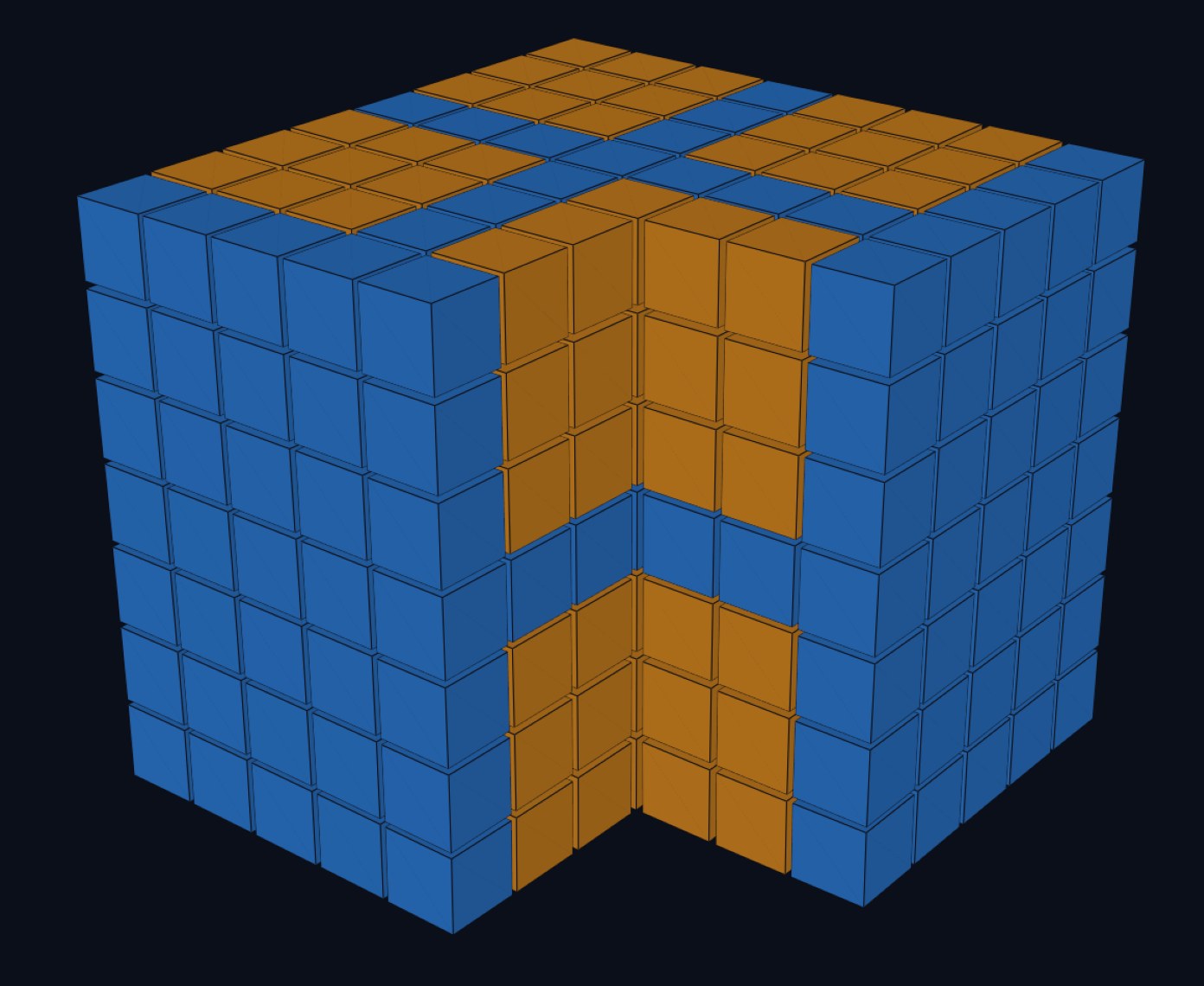
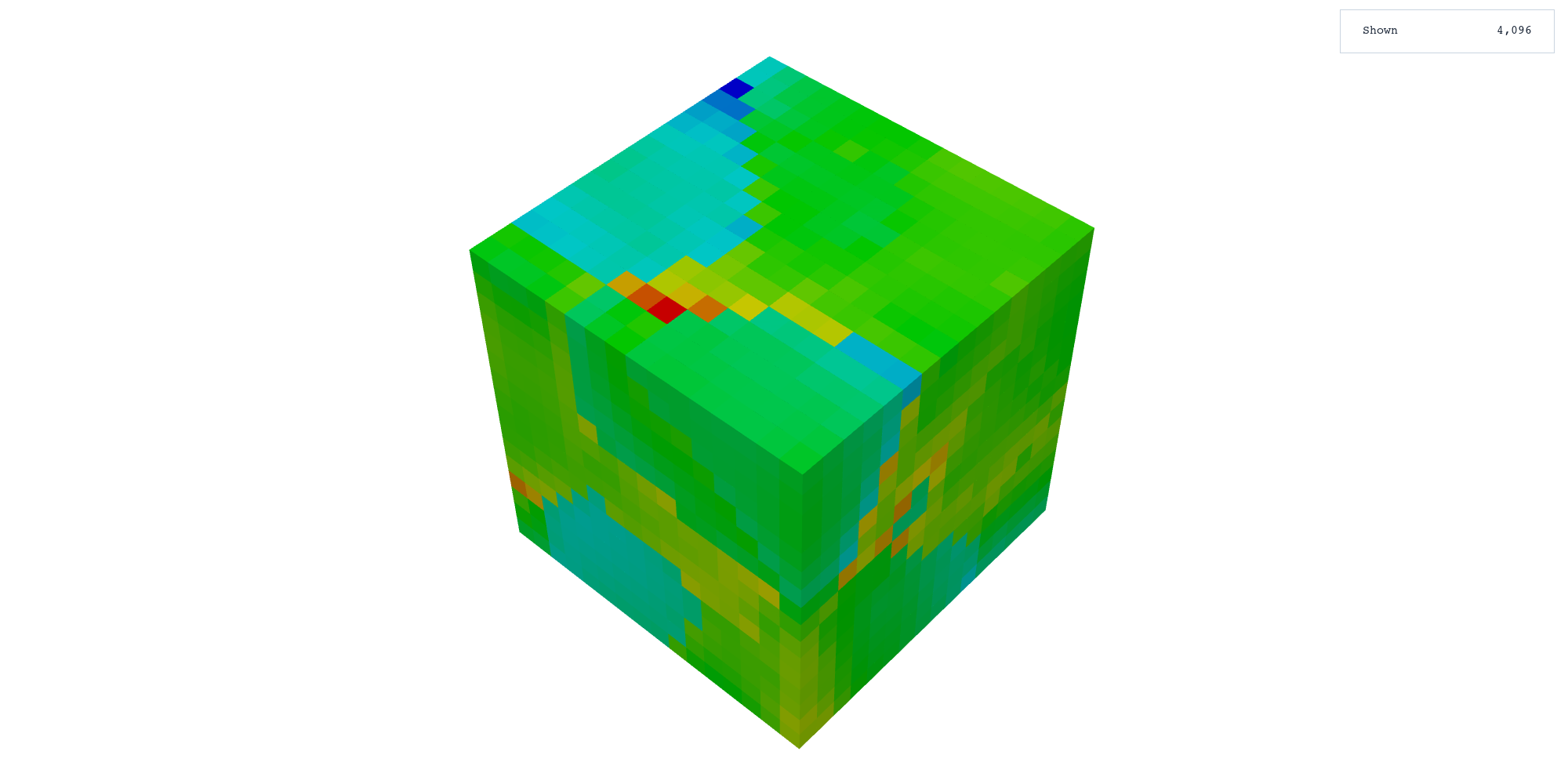
Alloy microstructure of two phases as one bonded Element body
Crystal mechanics

Elements with crystal stiffness

  • Full 21 constant anisotropic stiffness and a crystal orientation per element
  • Several phases in one bonded body, lattice misfit as eigenstrain
  • Checked against exact elasticity within 1%
Bring your own lattice: Atoms to Material →

Single, mixed and double precision builds for Linux and Windows, on GPU architectures from Turing (RTX 20 series) to the newest.
Toolchain and SDK

DEM
SPH
CFD-DEM
Elements

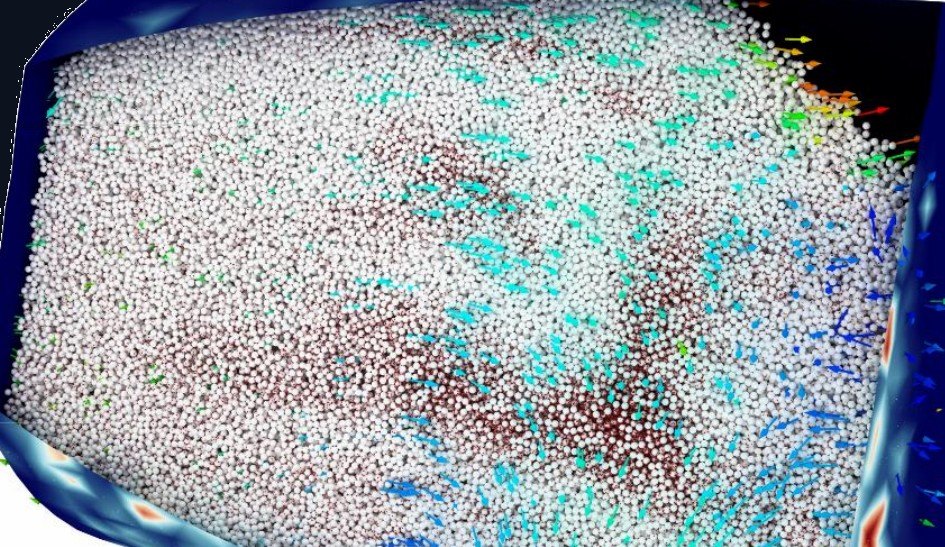
BlazeViewer: DEM, SPH, CFD (OpenFOAM) and bonded Element results in one scene, on a desktop or headless on a server.

  • Coloured by any field with fixed colour ranges; saved view files give the same camera, colours and ranges every time
  • Headless batch mode: screenshots, PNG sequences, MP4 video and plots of the summary tables, without a display
  • Live: follow a running simulation as it writes results
  • Photo-real offline rendering on the GPU, with scene export to USD
  • Force chains, particle traces, vectors, clip planes and plots of power, energy and damage
  • Browser Input Creator: materials, geometries, contact models and time steps set up in a web interface, without hand-editing configuration files.
  • BlazeLauncher and batch queue: multi-case runs, parameter sweeps and headless scheduling, with a GPU memory check before each run and progress monitoring.
  • C++ solver SDK: custom contact laws, boundary kinematics and material properties.
  • CUDA bridge: models train directly on the live GPU simulation, with WL3 hypergraph metrics computed by the solver itself during training; the solver physics runs alongside inference, self healing their predictions.

Physical AI →

Solver comparison

Native GPU multiphysics and Physical AI compared with commercial DEM and open source or CPU codes.

Capability BlazeMultiPhysics Commercial Enterprise DEM Open-Source / CPU DEM
1. Hardware Efficiency
GPU memory execution
✔ High Single-GPU Efficiency
Runs entirely on the GPU with direct in-memory execution.
◐ Multi-GPU Available
Multi-GPU solvers stall on CPU/PCIe transfers during multiphysics.
✘ CPU Cluster Bound
Severe memory bandwidth bottlenecks across distributed CPU nodes.
2. Particle Shapes
Geometry & breakage
✔ True Polyhedra & Elements
True convex polyhedra & deformable Element meshes.
◐ Clumps / Polyhedra
Multi-sphere clumps or older volume formulations; limited native crack breakage.
◐ Spheres & Bonds
Primarily spherical particles and bonded sphere clumps used to approximate irregular shapes.
3. Fluids & Melt
Hydrodynamics & thermal
✔ Native GPU SPH & Melt
Native GPU SPH fluids, slurry, viscoelastic melt, and thermal phase change.
◐ External CFD Add-Ons
Requires paid external CFD add-ons and expensive co-simulation licences.
◐ Custom User Routines
Requires manual patching of separate CFD codes or custom user routines.
4. CFD Co-Simulation
Mesh mapping & drag
✔ Direct GPU Mesh Mapping
Native GPU unstructured mesh mapping and compiled kernels (OpenFOAM); two-way CFD-DEM coupling with Kratos through Python.
✔ Turnkey CFD Suites
Established commercial CFD suites, but couplings stall on CPU cell search.
✔ CFDEMcoupling
Established open-source CFD-DEM coupling on CPU; memory-bound scaling.
5. AI Integration
Live tensors & GNN datasets
✔ Direct VRAM Tensors
CUDA bridge to the simulation tensors and pointers (MLLive), solver computed WL3 hypergraph metrics & HDF5 graphs (MLTrainGNN).
◐ Python / Sockets
Python scripting and socket interfaces; cannot share live GPU arrays mid-step.
◐ File Dumps & Hooks
File-based I/O or custom C++ memory hooks; high latency for live RL loops.
6. Ecosystem & Support
Ecosystem maturity
◐ Specialised GPU Architecture
Agile specialist solvers and Python bridge; focused multiphysics workflow.
✔ Broad Global Ecosystem
Extensive CAD interfaces, mature multi-physics suites, and global support.
✔ Fully Inspectable Open Source
Zero licence cost, community-driven code, and fully open academic research base.

Heritage

Over ten years of peer-reviewed GPU DEM development: BLAZE-DEM, to our knowledge the first published GPU DEM framework for convex polyhedral particles (2014); volume based polyhedral contact (2015); the open source Blaze-DEMGPU release (2016).

  • 1. Govender et al., “Development of a convex polyhedral discrete element simulation framework for NVIDIA Kepler based GPUs”, Journal of Computational and Applied Mathematics 270 (2014) 386-400.
  • 2. Govender et al., “Blaze-DEMGPU: Modular high performance DEM framework for the GPU architecture”, SoftwareX 5 (2016) 62-66.
  • 3. Govender et al., “Collision detection of convex polyhedra on the GPU for the discrete element method”, Applied Mathematics and Computation 267 (2015) 810-829.
BlazeMultiPhysics on your hardwareRequest an evaluation licence or talk to us about integrating Blaze into your simulation and research pipelines.