AI + Physics

Learns your mill, so you don't need to guess.

Multiphysics on the GPU: balls and ore as DEM and the slurry as SPH in one simulation. Mill Sim AI learns how your liners wear from your own laser scans, then gives power, throughput, P80 and liner life for SAG, AG and ball mills in one desktop program for Linux and Windows (Mill Sim AI 2026 V11).
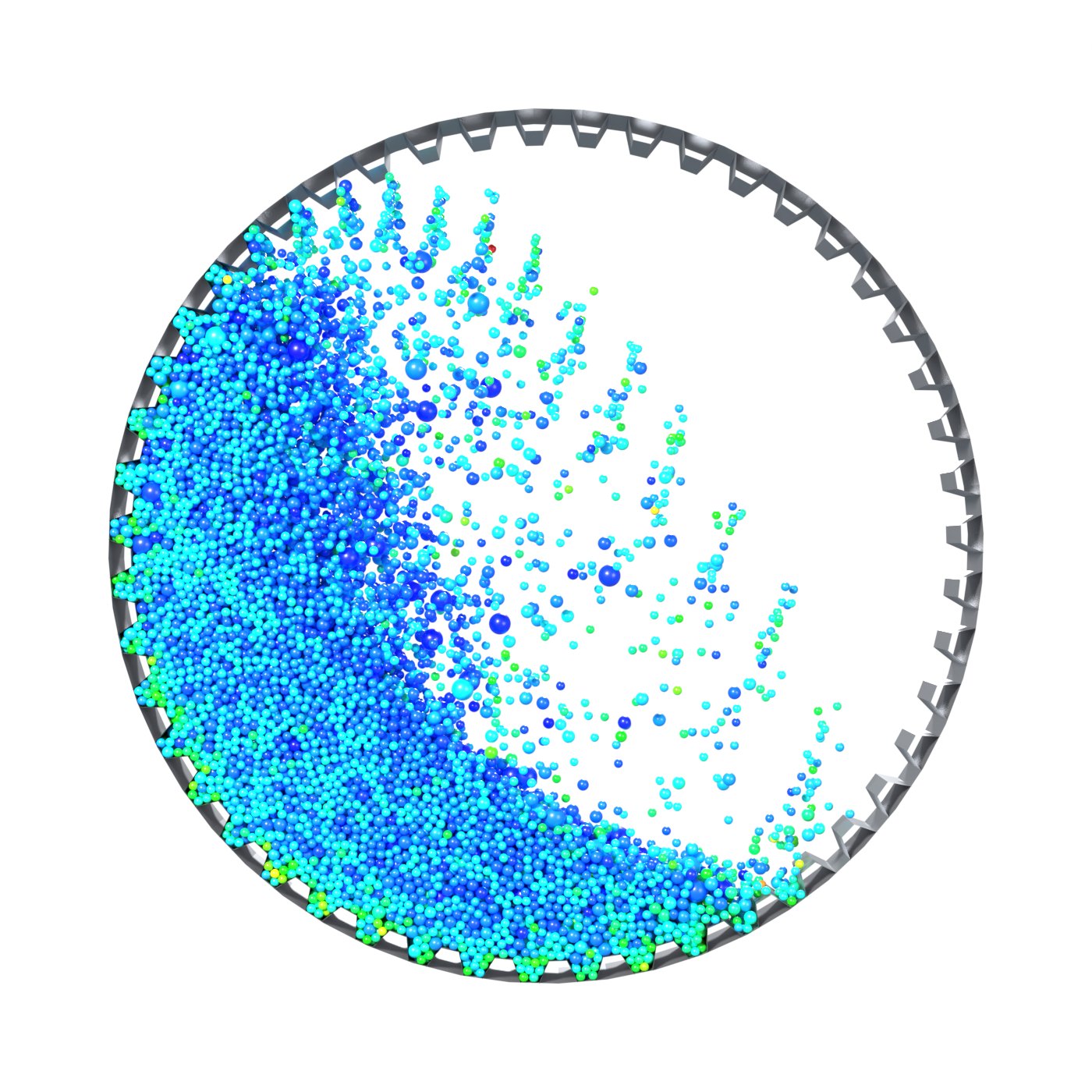
Five questions every mill engineer asksMill Sim AI answers them from one simulation run
Mill power

Mill power

Gross kW, torque arm and contact power from the simulation run.
Throughput and P80

Throughput and P80

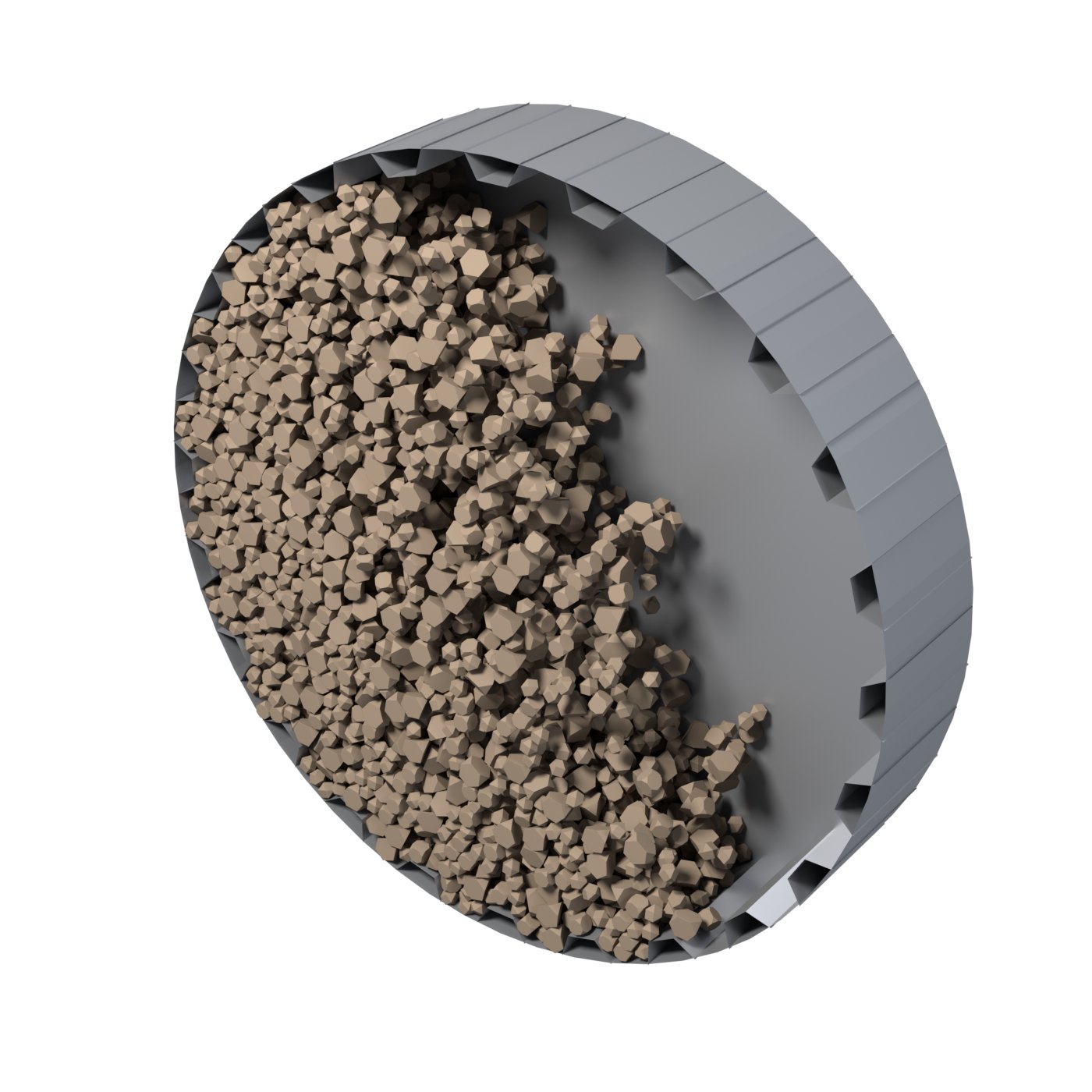
Vogel-Peukert breakage scaled to plant t/h.
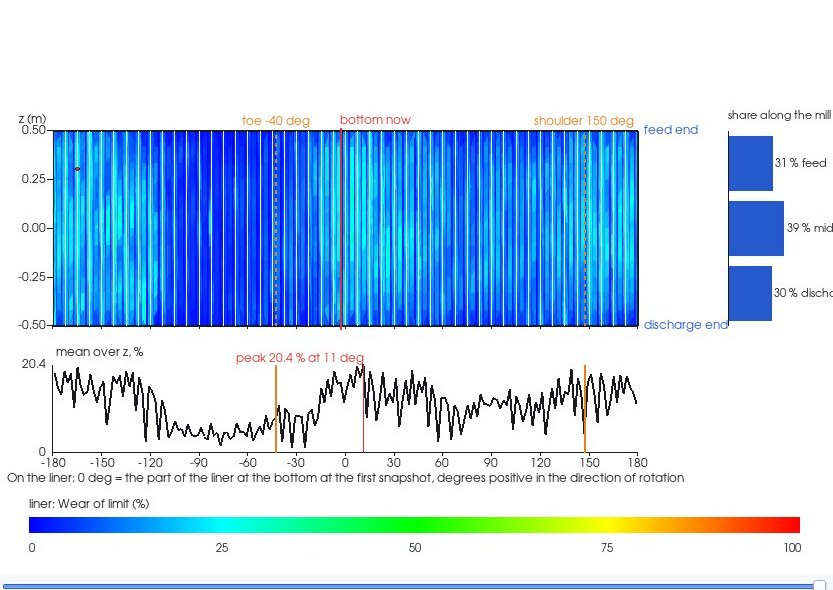
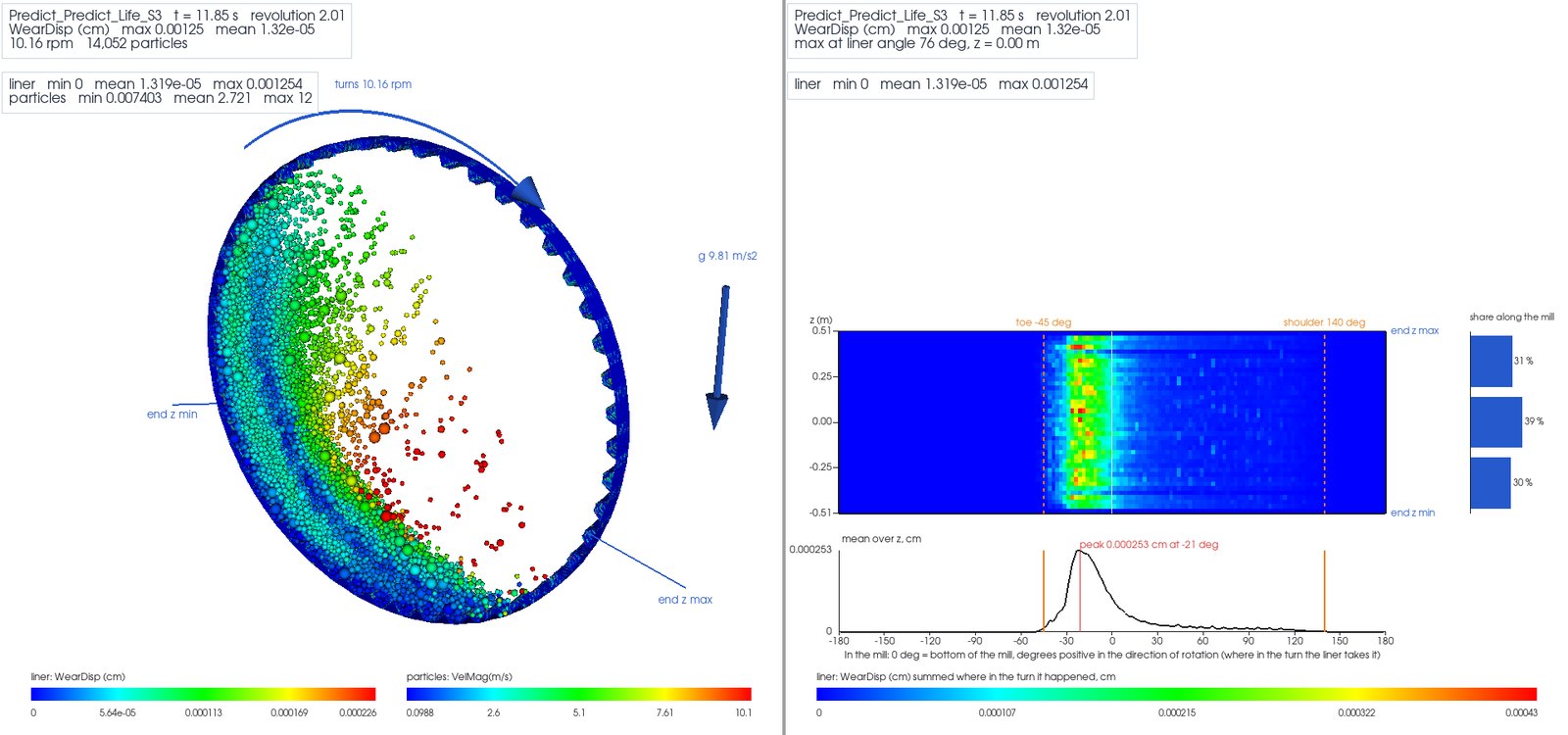
Liner life: wear along the unrolled liner in the Mill Sim AI viewer

Liner life

From your scans, learned wear: the relining date.
Effect of slurry

Effect of slurry

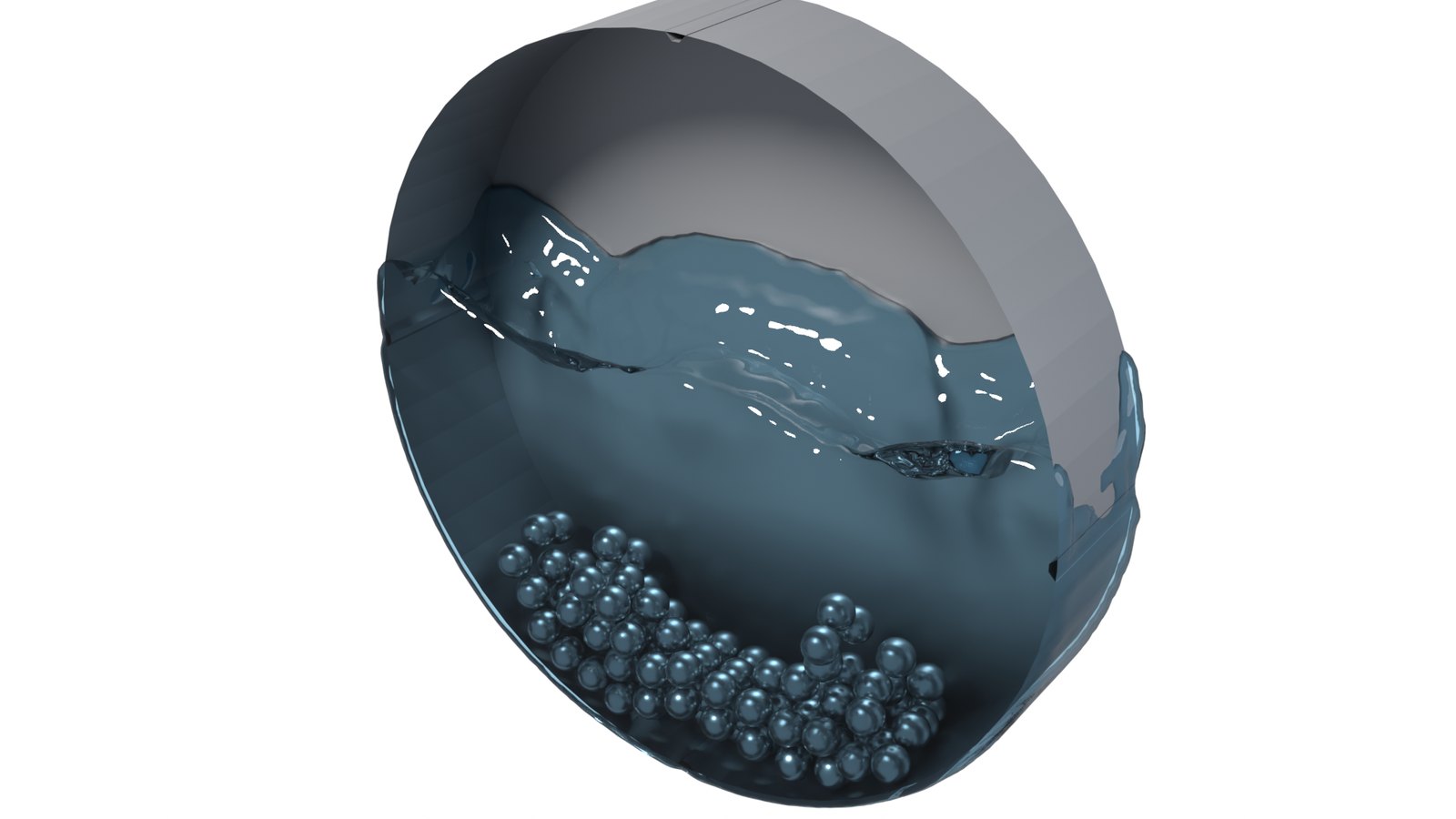
Slurry shifts power, impact and wear; learned slurry or two-way SPH.
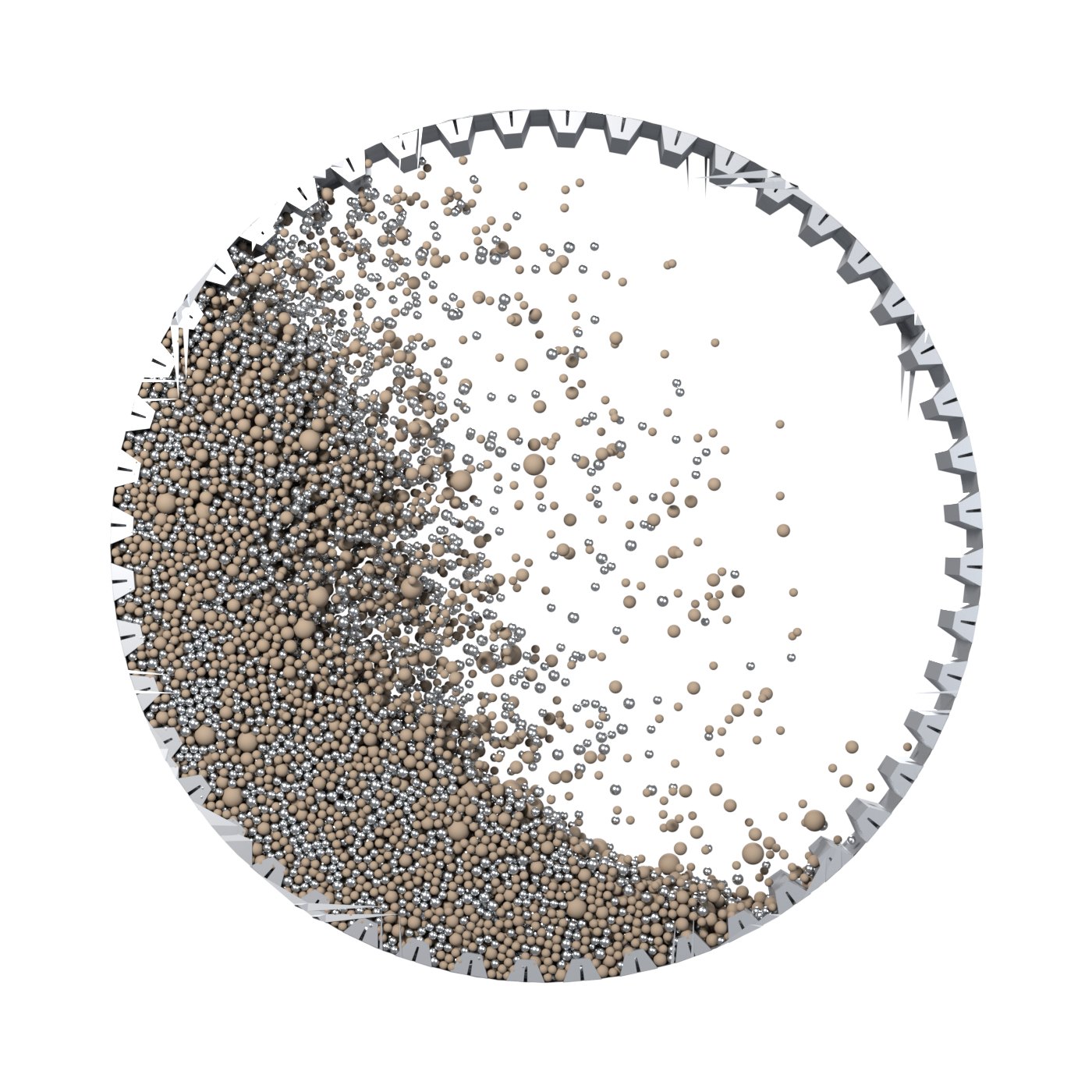
Best liner design

Best liner design

Design DOE ranks candidate liners by a figure of merit.

One program, from plant survey to liner design

The Blaze solver, the viewer and the analysis tools ship inside it. No external CAD pre-processors, meshers or post-processing scripts.

Set up

Mill and charge

  • One-click plant check: the survey (power, feed rate, F80, P80, Bond work index) against the published tumbling mill power models (Bond/Rowland, Hogg and Fuerstenau) and Bond grind energy, before any GPU time is spent
  • Liner from your own STL or laser scan, or the simple and chord lifter builders with live 2D previews
  • Uniform or axially graded media and ore charge; checks before the case is created and a GPU memory check before every run
Solve

The Blaze solver

  • True convex polyhedral ore and spheres
  • Vogel-Peukert ore breakage, calibrated to plant throughput
  • Two way coupled SPH slurry, or Learned Slurry from a dry run
  • Liner wear from the real hardness, solid element lifters, learned wear from scans
Results

Report and viewer

  • One HTML report per run, no internet needed
  • Compare runs side by side
  • Mill viewer: 3D cut view, unrolled liner, slices, trajectories, wear views
  • Power, throughput and product size from the throughput window
Design

Studies and queue

  • Calibration DOE matches the measured power and its split
  • Design DOE proposes and ranks liner designs
  • Run queue for several saved cases, for example overnight

Liner wear learned from your scans

Solid element lifters. Lifters are made of small solid wedge elements. When the frictional work and normal impacts exceed the Vickers hardness of the liner material, the solver removes the worn elements, so the charge always meets the real, changing lifter shape without the mesh deforming.

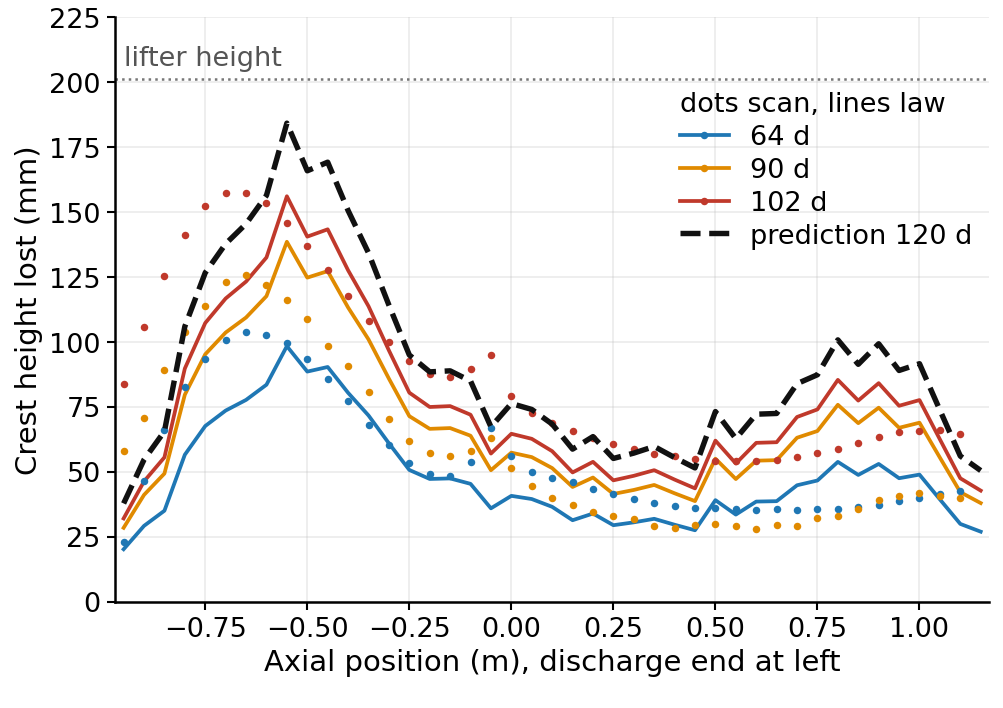
One button: Predict liner life. Load the plant laser scans, run the mill once and press Predict liner life. Mill Sim AI learns the wear law from the scans and runs the loop itself until the wear limit you set, giving the reline date and a chart of lifter crest height against liner age for each section along the mill.

Site inputs with physics built in. Ore abrasiveness (abrasion index, JK ta), liner hardness, slurry solids, pulp pH, corrosive water, ball size and throughput enter as inputs. Known directions are priors: harder liners wear slower, more abrasive ore and corrosive pulp wear faster, unmeasured inputs stay neutral. The law learned at one site carries to another site and to new mill designs.
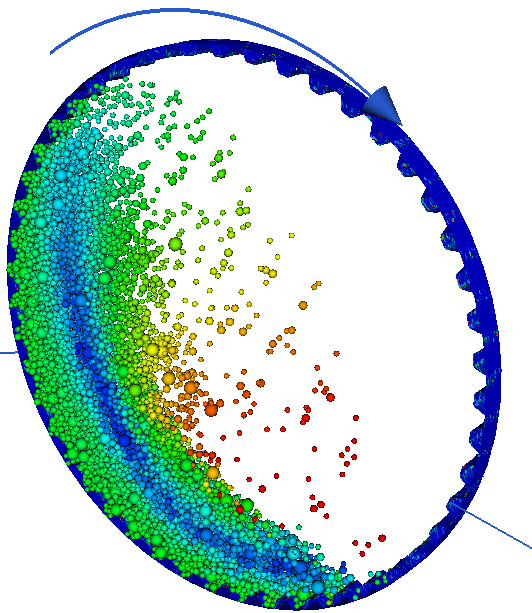
  • Wear depth Δw ≥ 0 everywhere (metal never un-wears)
  • Wear volume ΔV fitted to the plant 3D laser scan series
  • Smooth surface: no jagged spikes, folded vertices or inverted normals
  • Backing plate floor: no wear through the shell or head plates; the mesh stays clean over the whole campaign
Lifter crest height lost along the mill: scans, learned wear law and forecast
Lifter crest height lost along the mill: laser scans at 64, 90 and 102 days after relining (dots), the wear law learned from them (lines), and its forecast at 120 days (dashed).
Predict liner lifeDEM, learned law, advance the liner, DEM again
DEM for a few revolutions
Step 1

DEM for a few revolutions

Impact and sliding energy on every point of the liner.

Learned wear law
Step 2

Learned wear law

Scans supply how much metal that loading removes.
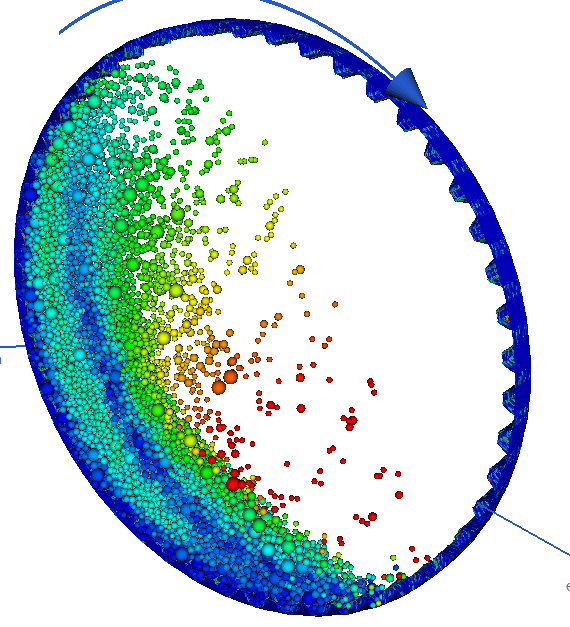
Advance the liner by weeks
Step 3

Advance the liner by weeks

The worn liner stays a clean mesh.

DEM on the worn shape
Step 4

DEM on the worn shape

Repeat until the wear limit is reached.
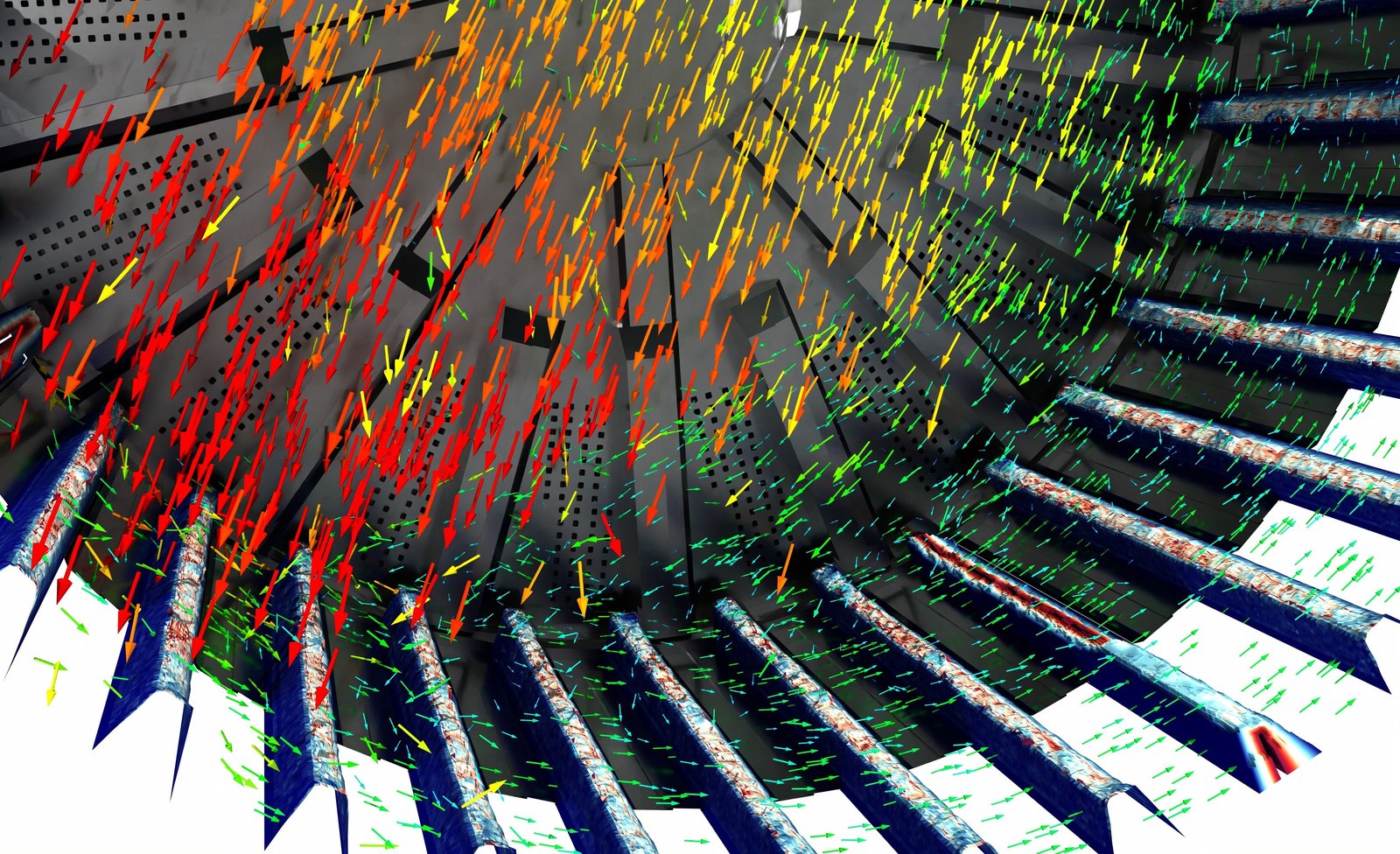
Inside a full mill: worn solid element lifters coloured by wear, with the charge velocity vectors
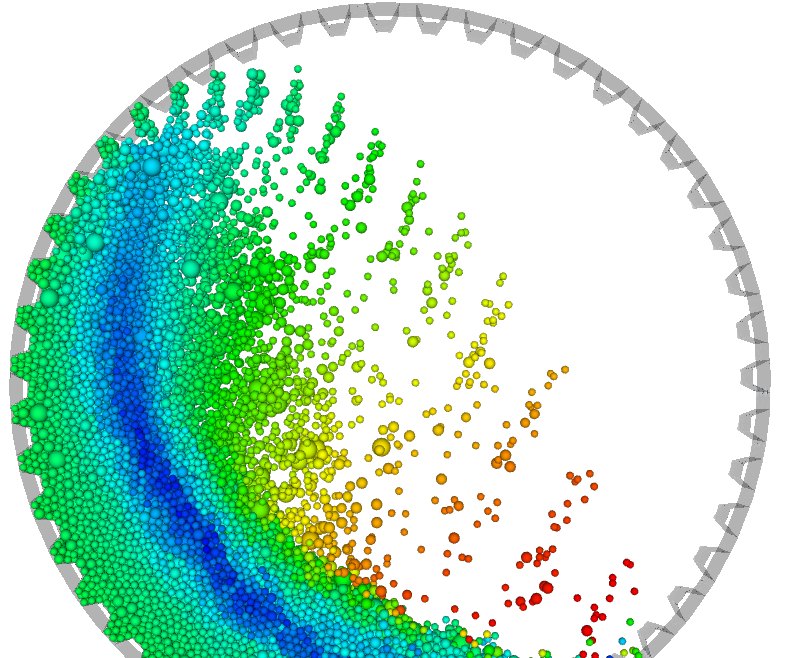
Solid element lifters wear inside the running mill: the worn surface follows the charge.
One worn solid element lifter bar coloured by wear
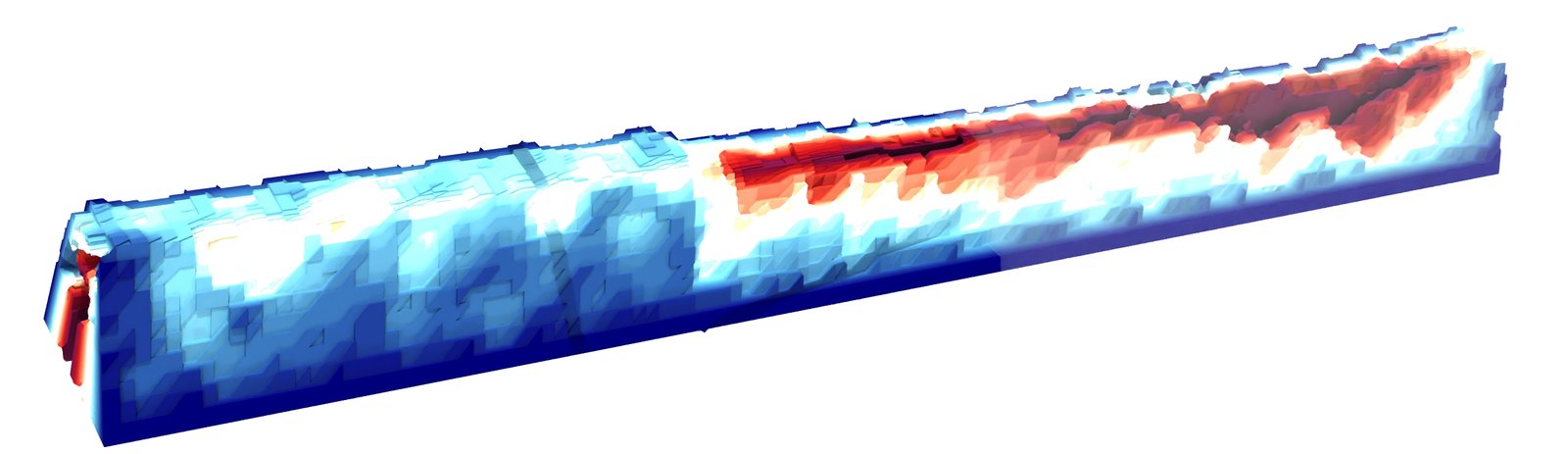
One lifter bar: wear concentrated where the charge strikes it.
Coupled DEM charge running on predicted worn liner shape in 3D and unrolled view
DEM on the predicted worn liner: the 3D mill beside the unrolled liner view.

Ore breakage and slurry

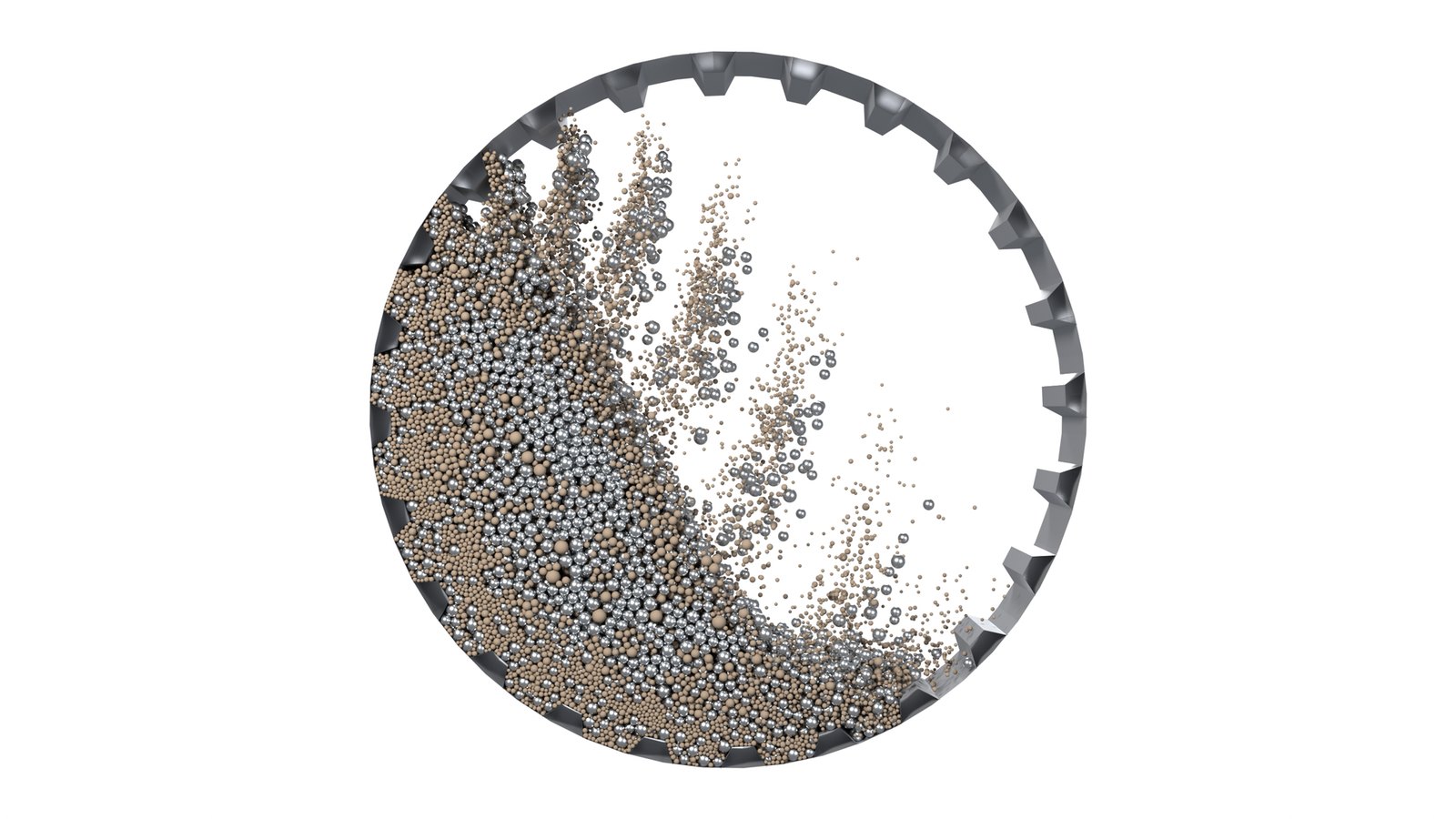
Ore breakage in a SAG mill

Vogel-Peukert breakage and throughput

Each impact breaks an ore sphere with the Vogel-Peukert probability; broken spheres are replaced by fragments that grow to the parent volume. The Calibrate button fits the breakage to the plant throughput, giving gross power, t/h and P80.

Two way coupled SPH slurry

The slurry as SPH fluid, two way coupled with the ore and grinding media, discharging through the grate. Power, discharge and backflow are read into the report.
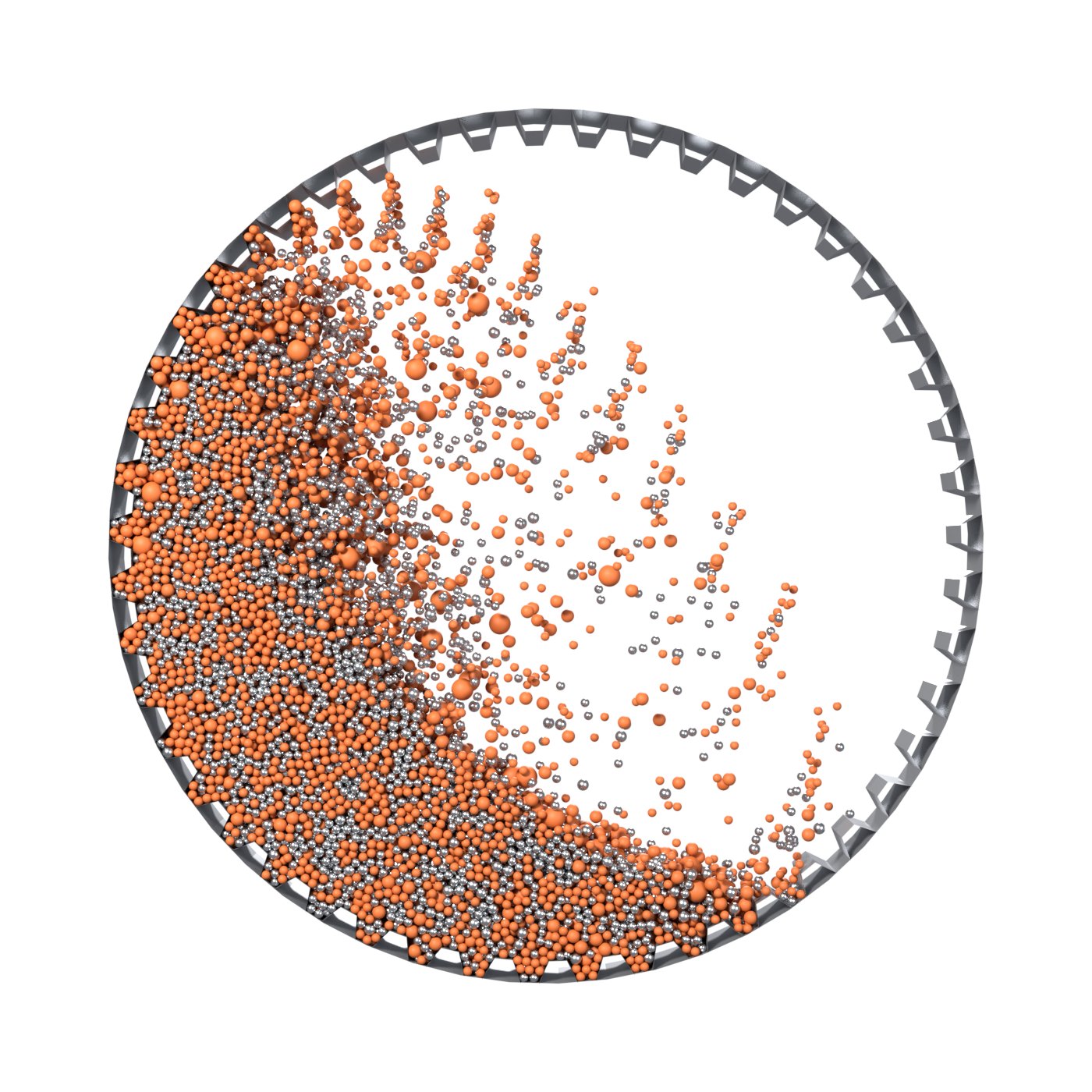
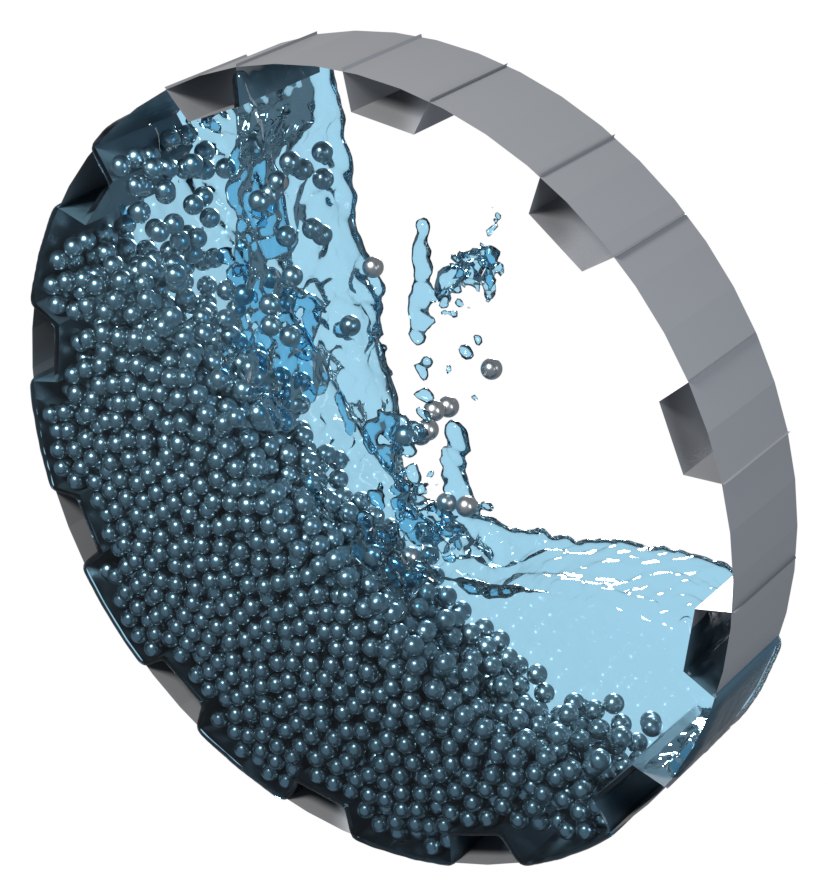
The mill run dryThe same mill with SPH slurry

Learned Slurry (Base)

A library of pairs, the same mill dry (left) and with SPH slurry (right), gives the factors by which slurry shifts power, liner impact and shear power, peak force and wear, so a fast dry run gets a slurry estimate with its range.
Try Mill Sim AI on your millLiner life, power, throughput and P80 on your GPU workstation.