Simulate how real materials flow, mix, break and wear, with properties computed from the crystal, so engineers and learned controllers work from physics instead of fitted guesses.
 NVIDIA CUDA Research Center since 2013
True convex polyhedra with volume based contact, SPH fluids, bonded Elements that crack and CFD coupling in one GPU solver, with a CUDA bridge that trains learned models on the live simulation and runs the physics beside them at inference.
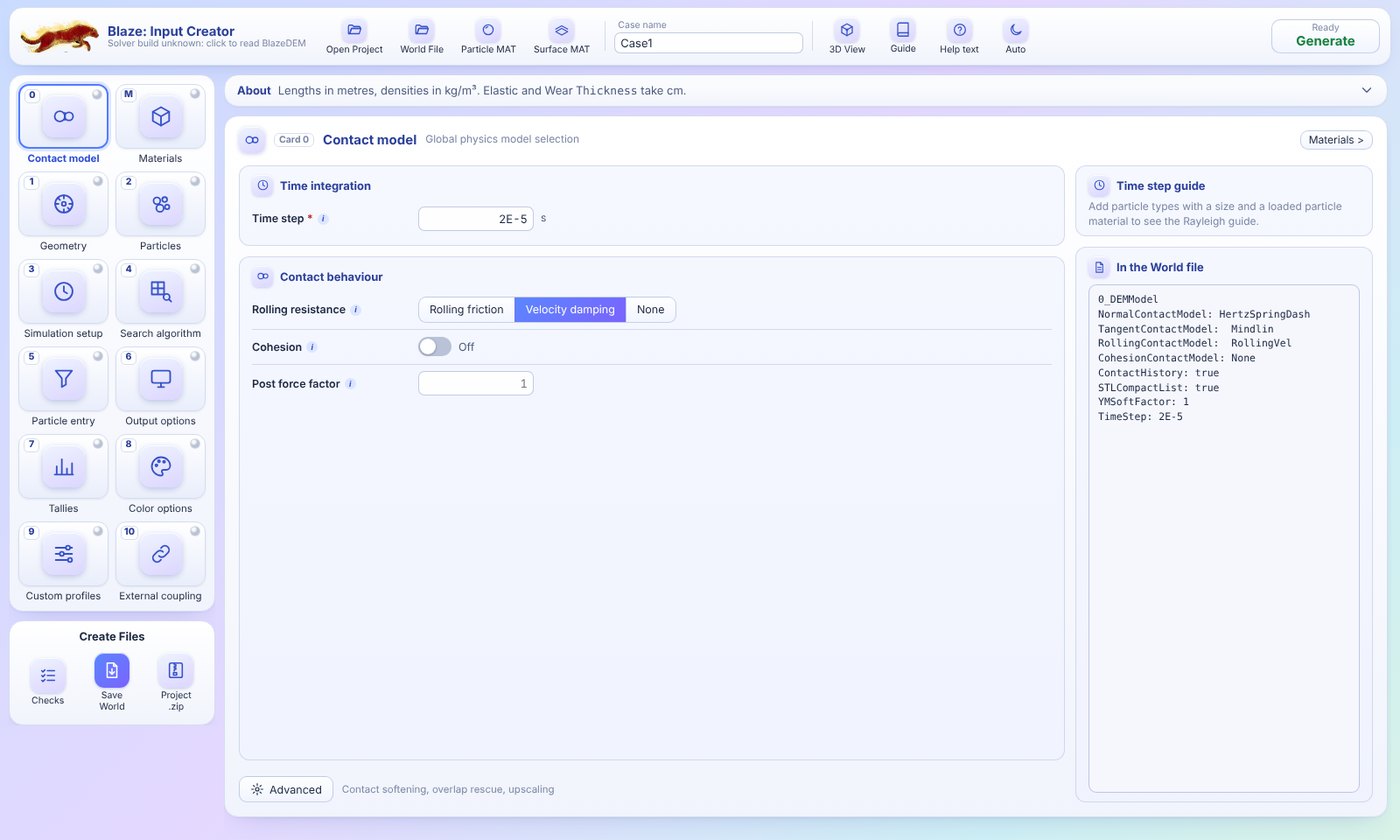
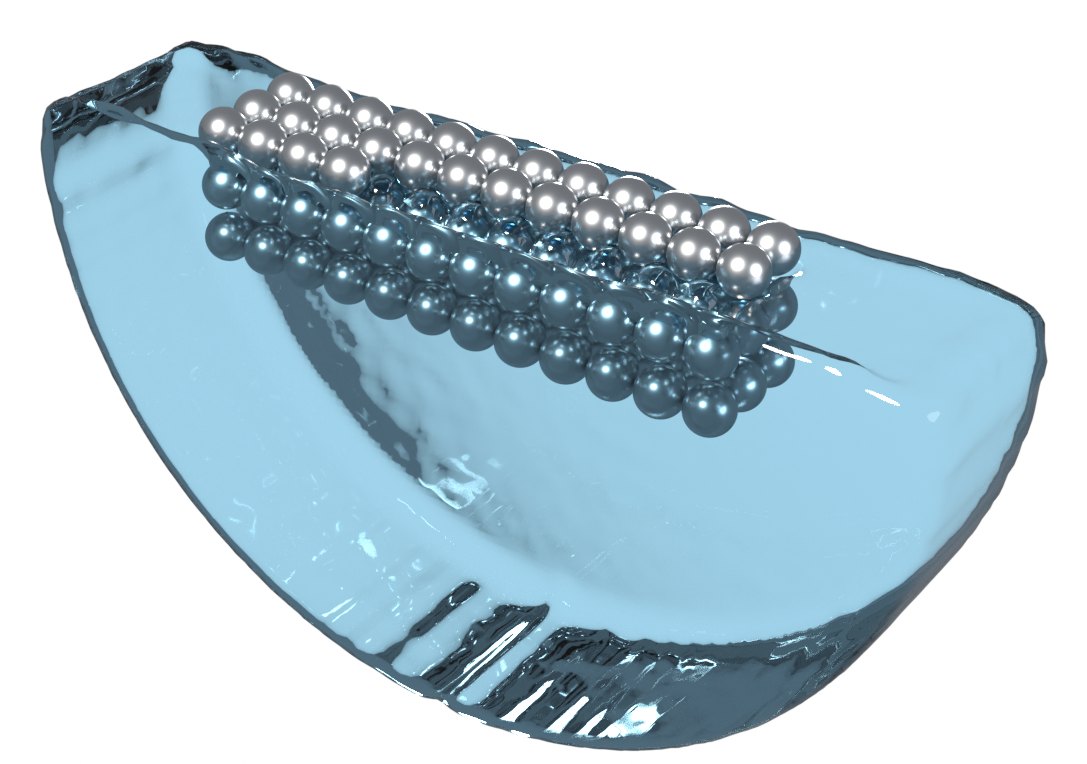
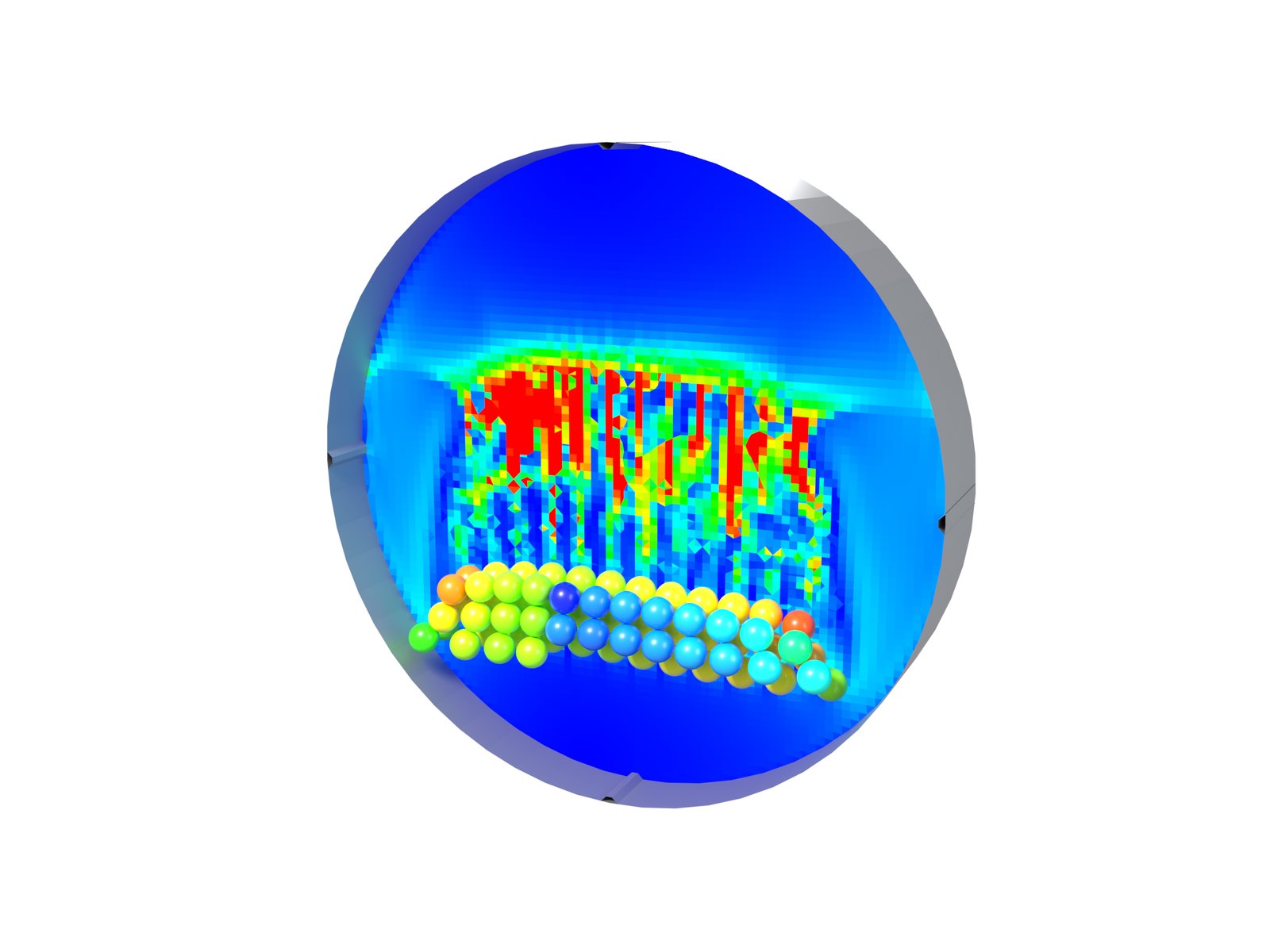
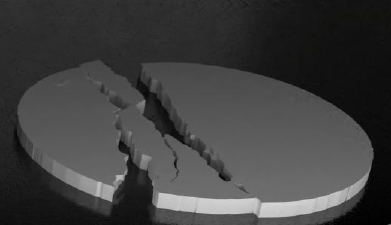
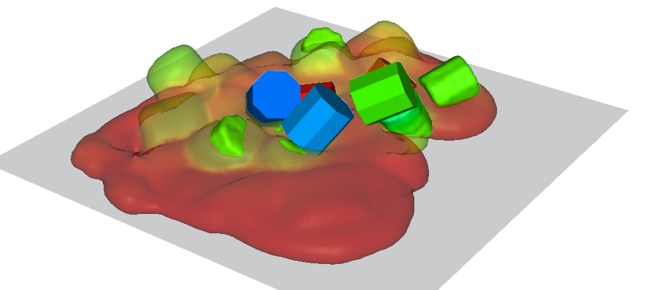
Particles, fluids and cracking solids in any process: whole mills, mixers and feeders on the GPU, CFD-DEM with OpenFOAM and Kratos, and a browser input creator, run queue and viewer.
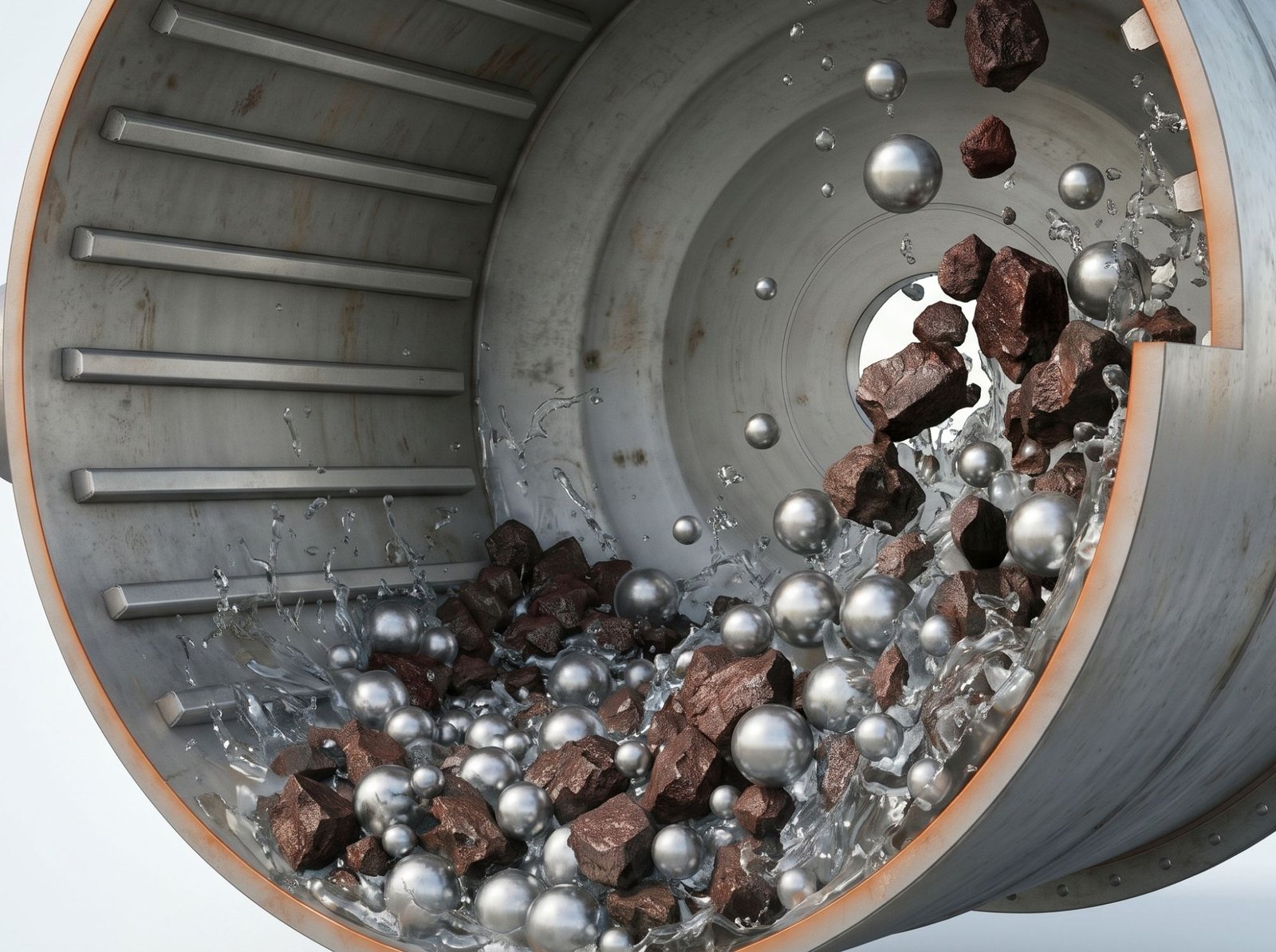
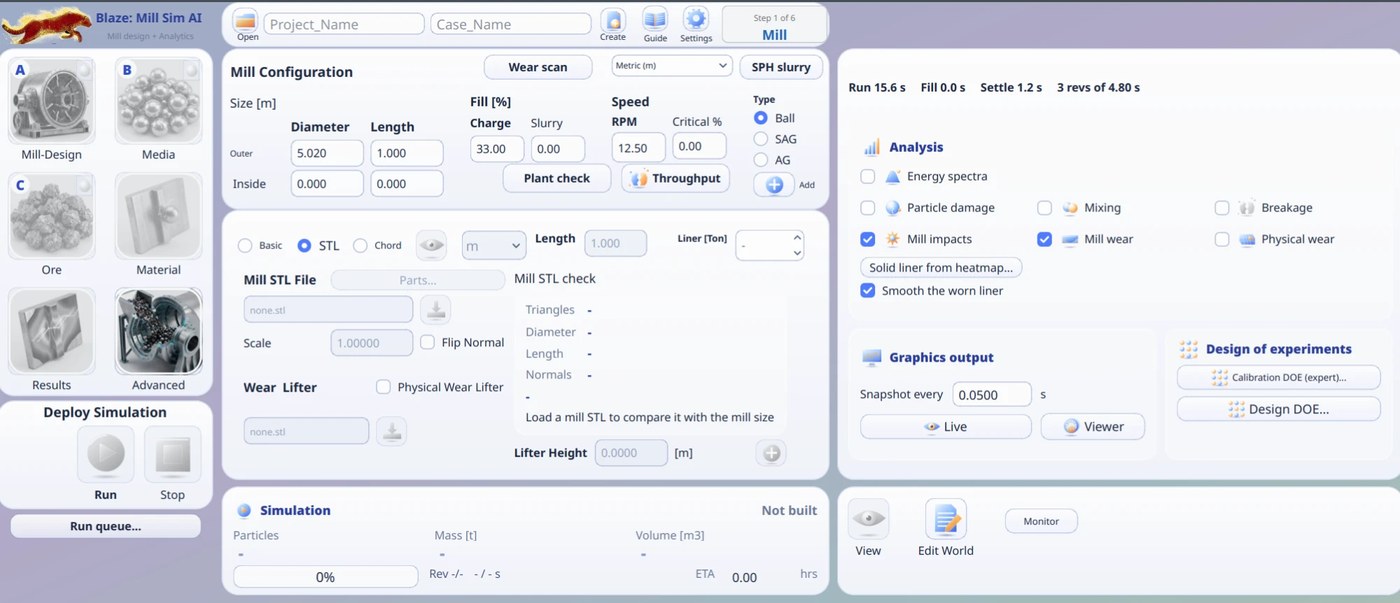
Balls and ore as DEM and the slurry as SPH in one GPU simulation, with a liner wear law learned from your laser scans: power, throughput, P80 and liner life, calibrated to the plant.
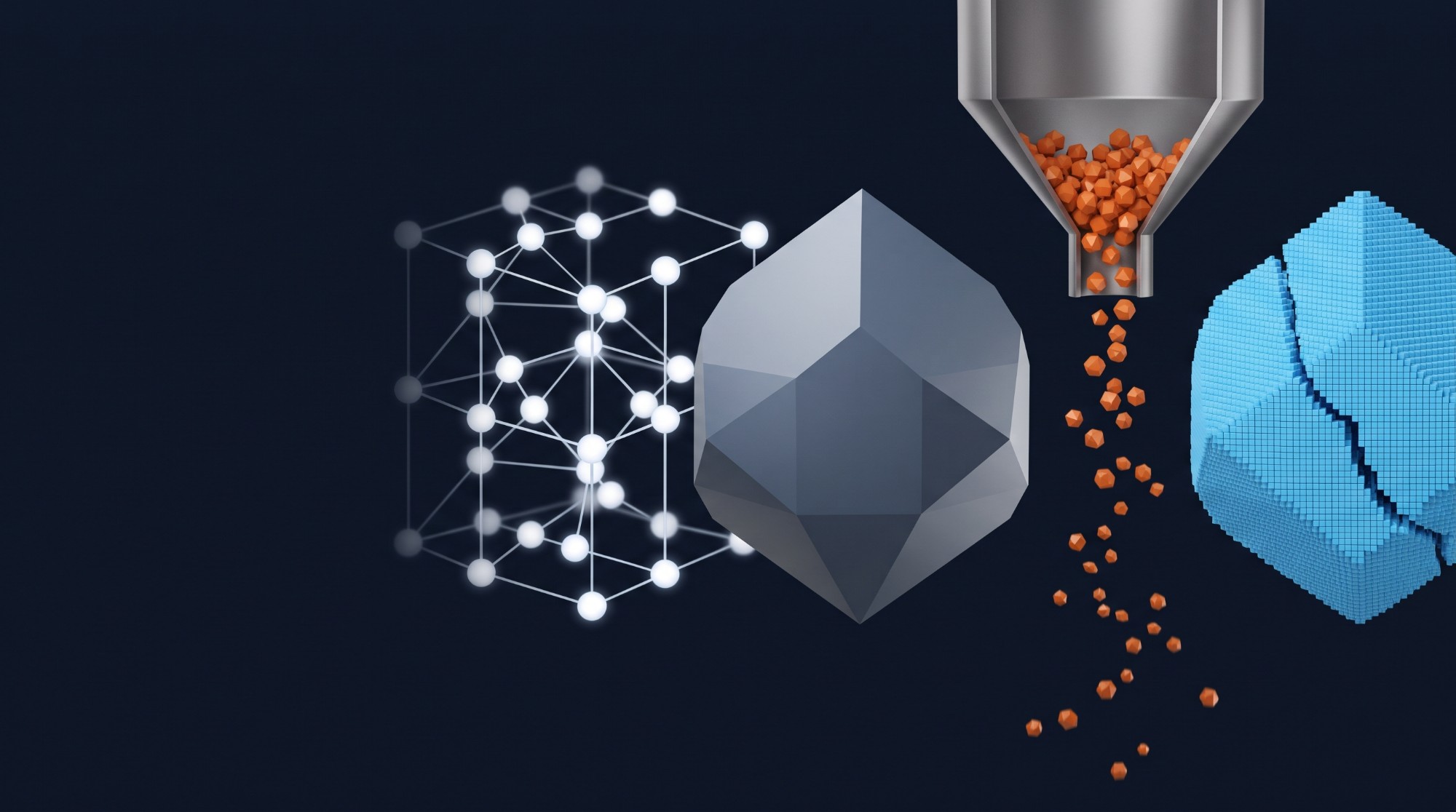
Material properties computed from the crystal lattice (stiffness, crystal shape, cohesion and friction per face) and carried into simulation of microstructures and process equipment.
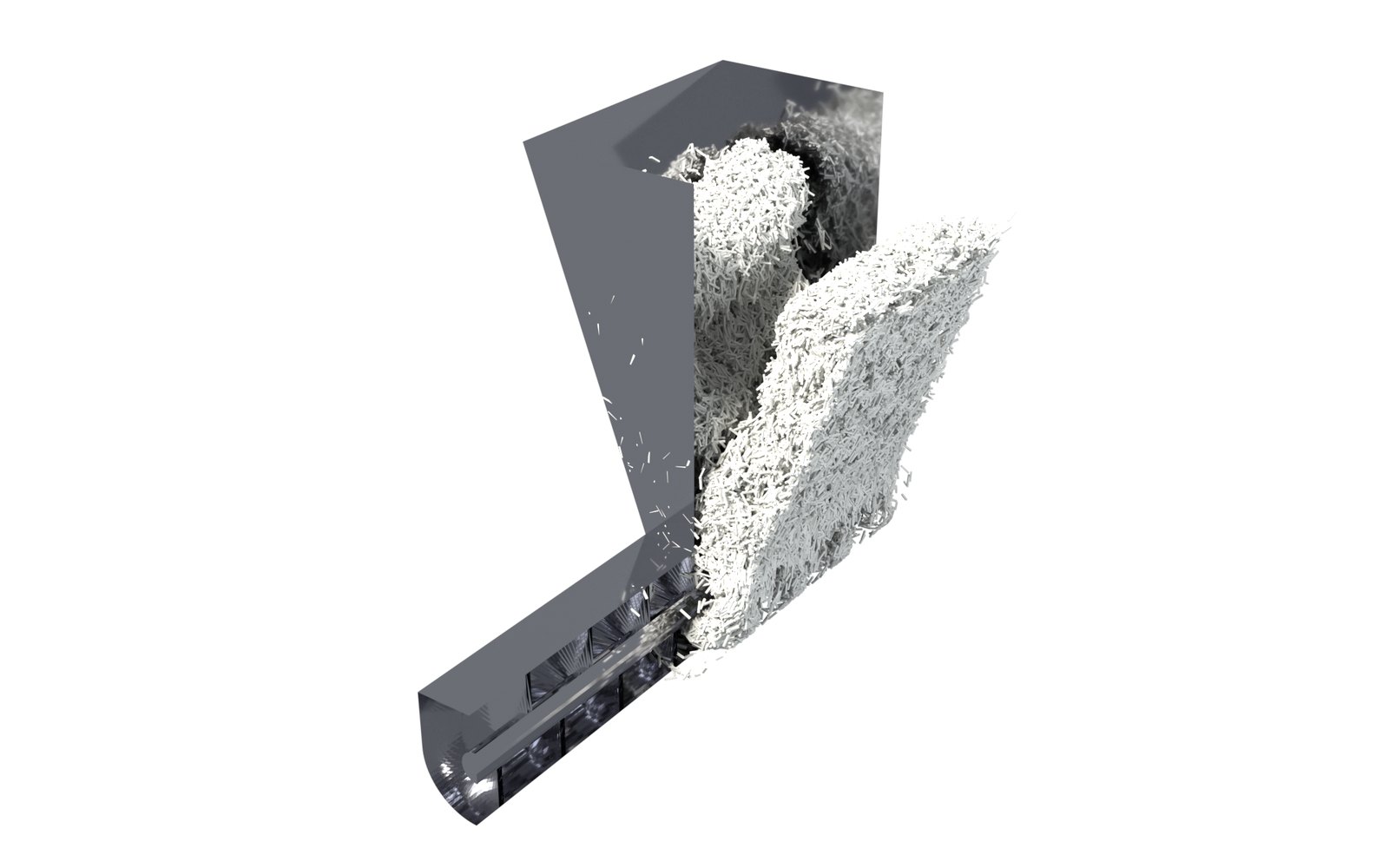
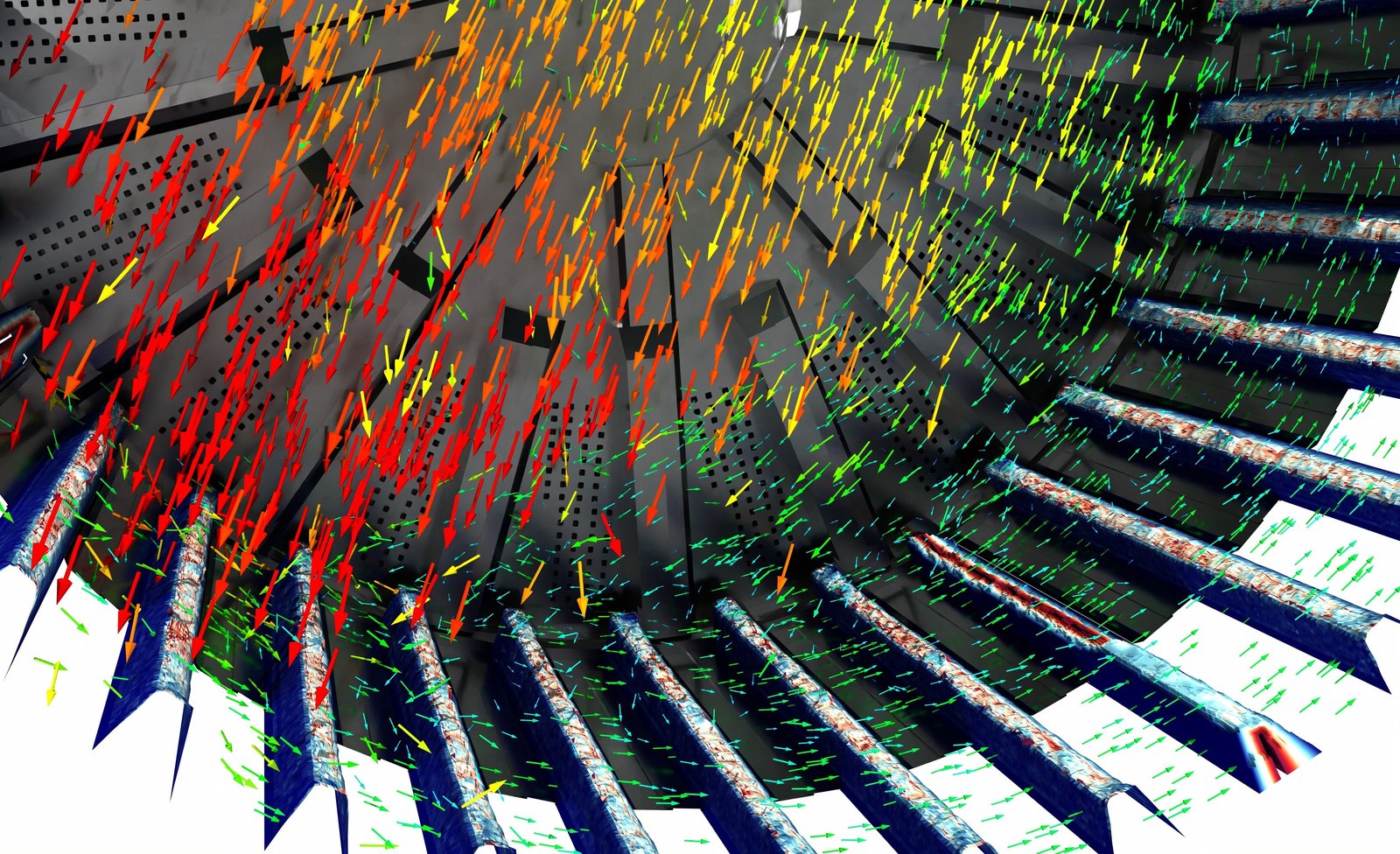
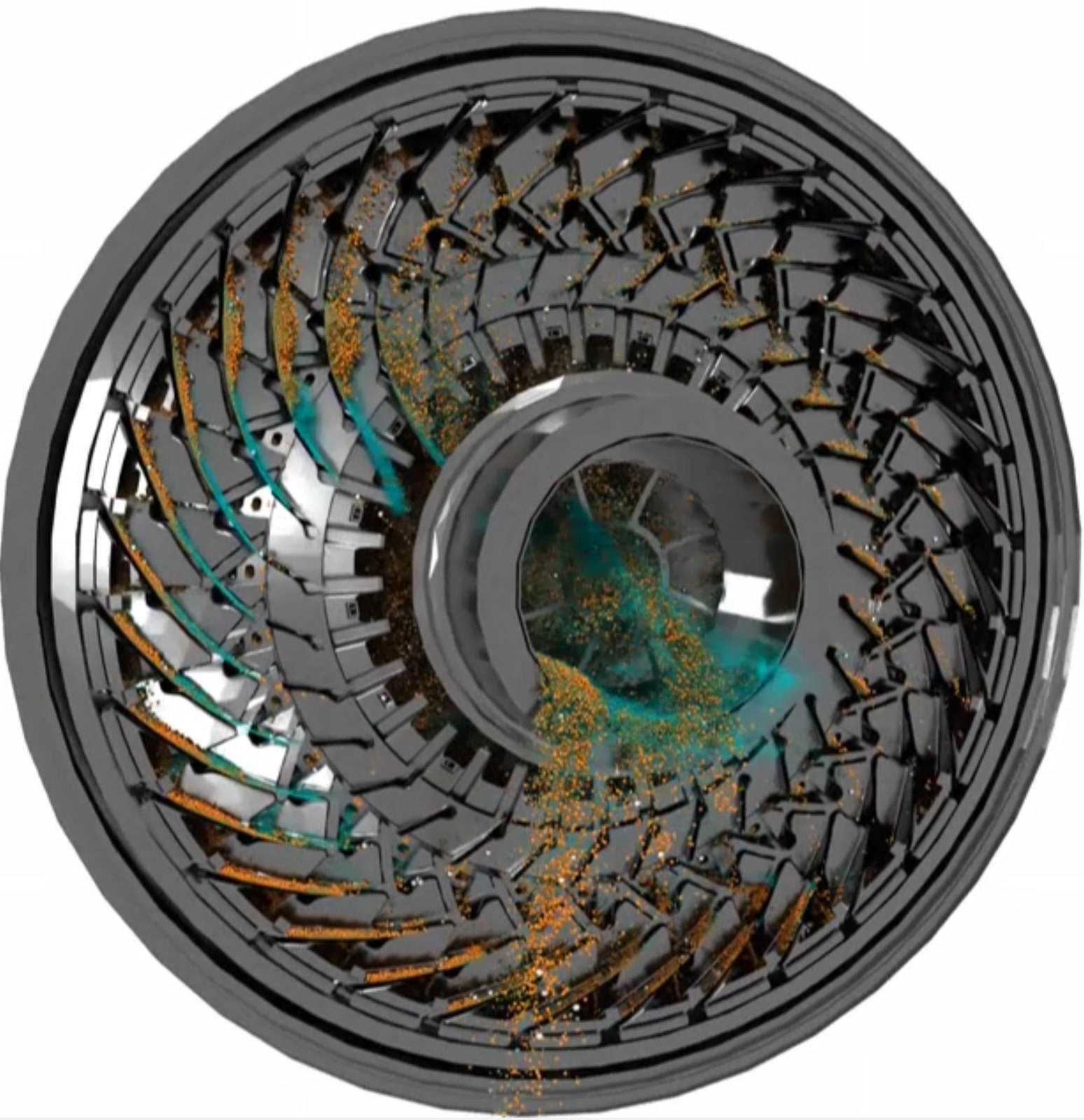
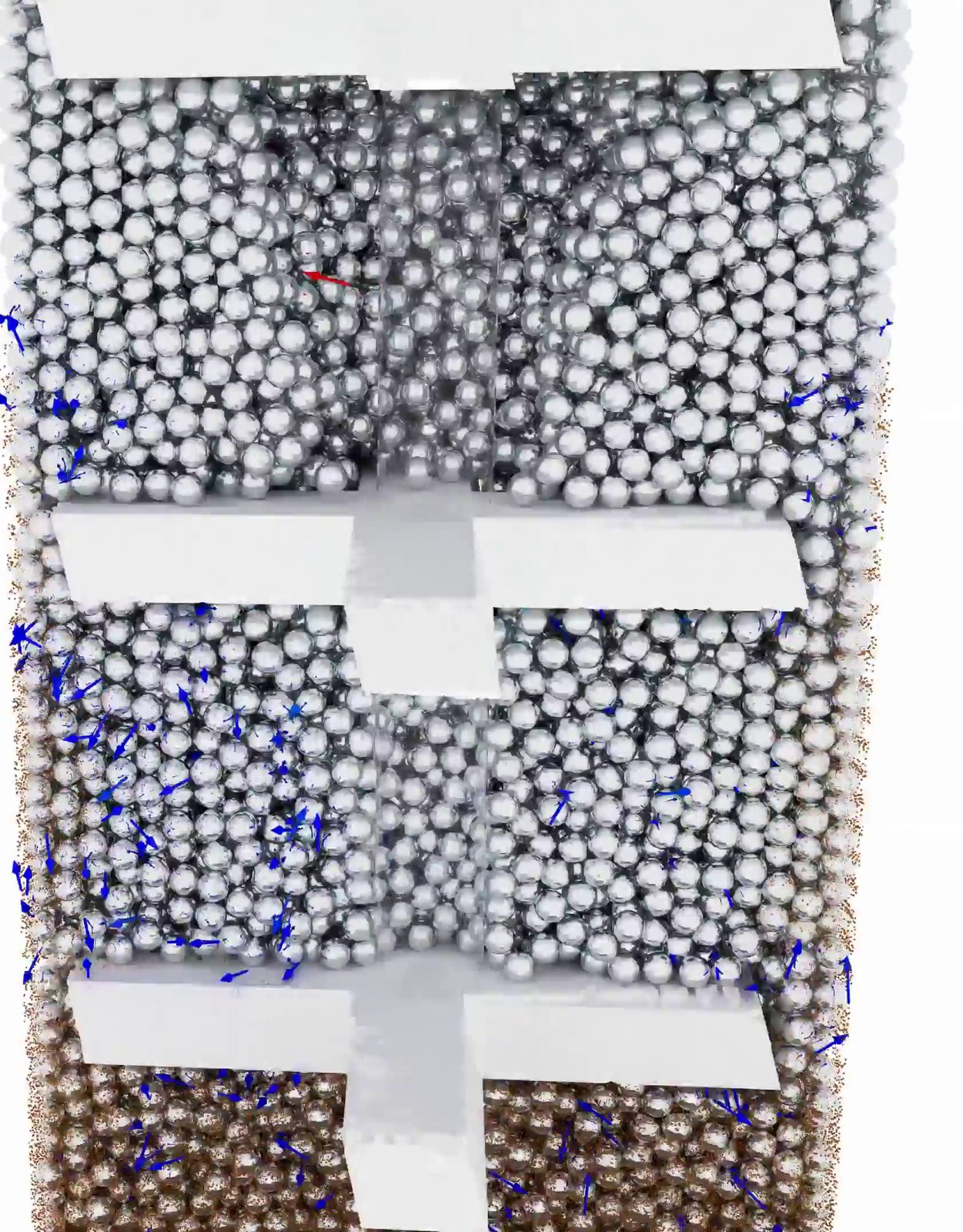
A twin that reveals the underlying mechanics predicts beyond the conditions it was trained on. In our bucket excavator agent, a learned controller infers the hidden particle state from the drive signals, acts, and checks its own predictions against a live DEM simulation.
Physical AI →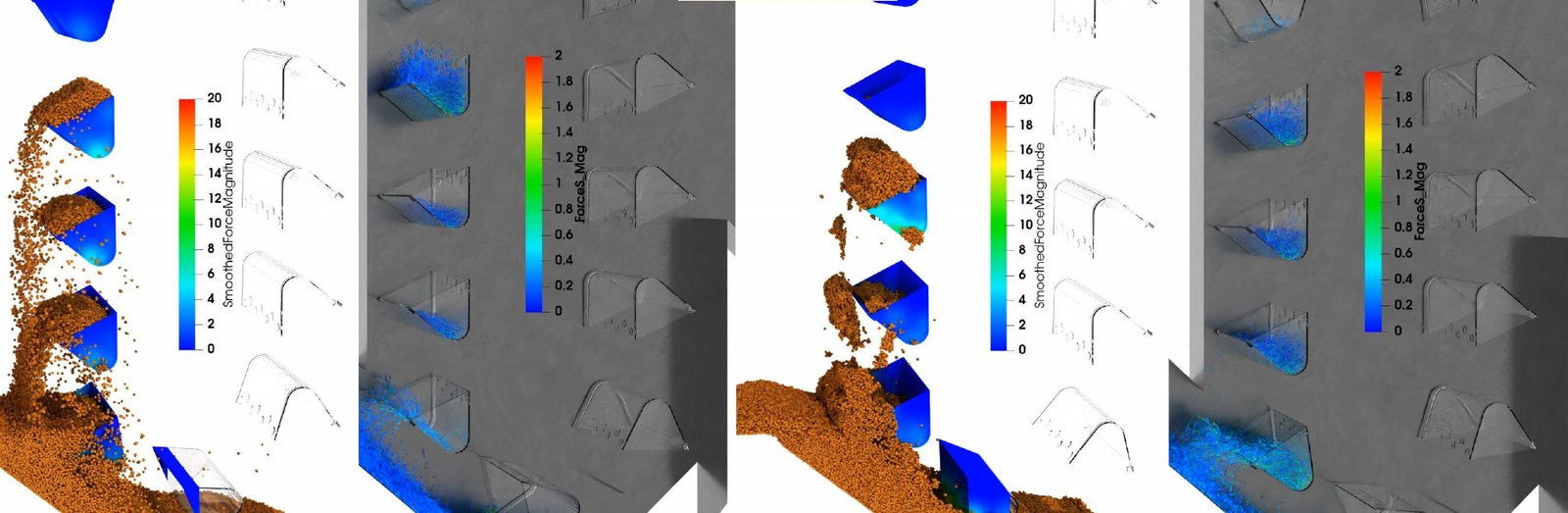
Blaze began as BLAZE-DEM, to our knowledge the first published GPU DEM framework for convex polyhedral particles (2014). Released as open source GPU DEM for polyhedral particles (SoftwareX 2016). Polyhedral contact forces come from the overlap volume of the two polyhedra (volume based contact), not from penetration distance. Over ten years of continuous peer-reviewed GPU DEM development.
NVIDIA CUDA Research Center
since 2013 for Blaze-DEM, University of Johannesburg
NVIDIA Applied Research Accelerator Program
funded
NVIDIA Inception Program
member