Not a single simulation. The whole process, from binder spray granulation to a coated tablet, coupled across scales and physics in one code, each step handing its state to the next.
Each material is calibrated once, never per simulation. After that the particle properties stay fixed, so a process change at any step can be followed through to the strength of the final tablet.
The chain starts with the binder spray granulation. Tablet strength depends on how the blend fills the die, and each step hands its state to the next: the mass, lubricant and glidant are carried from the cut to the tablet. The tablet is a bonded solid, so it can go on into a later process such as coating.
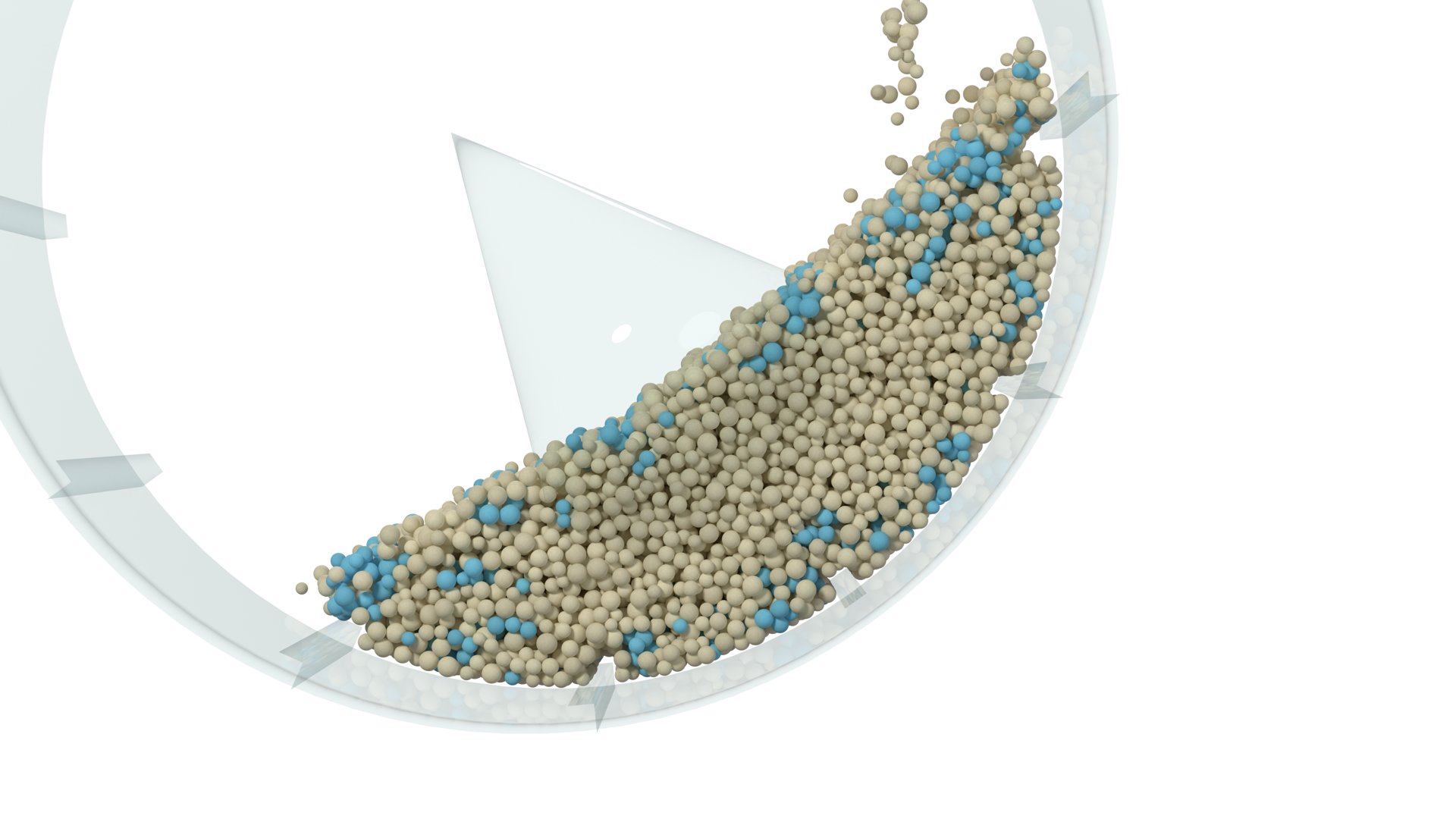
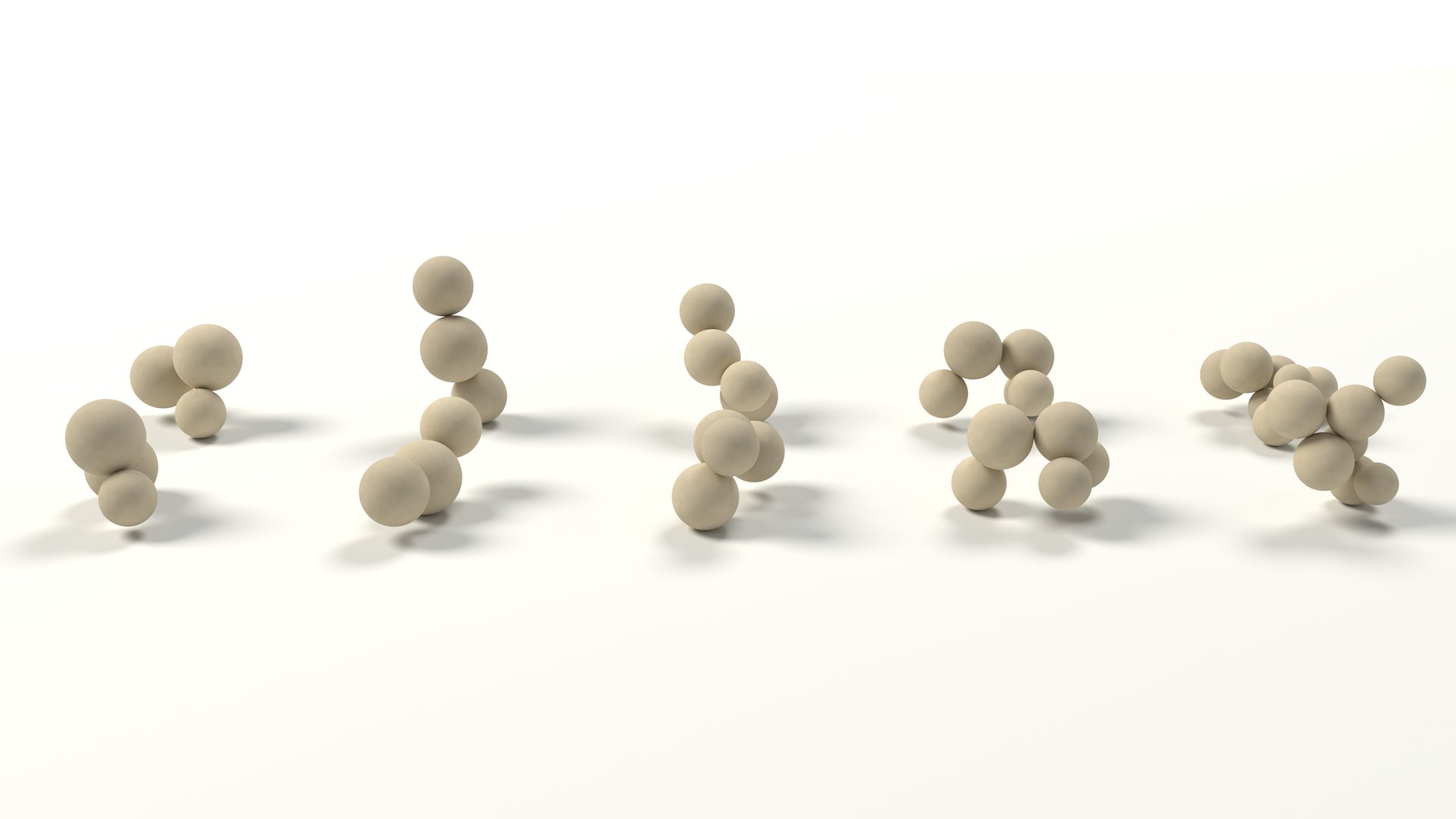
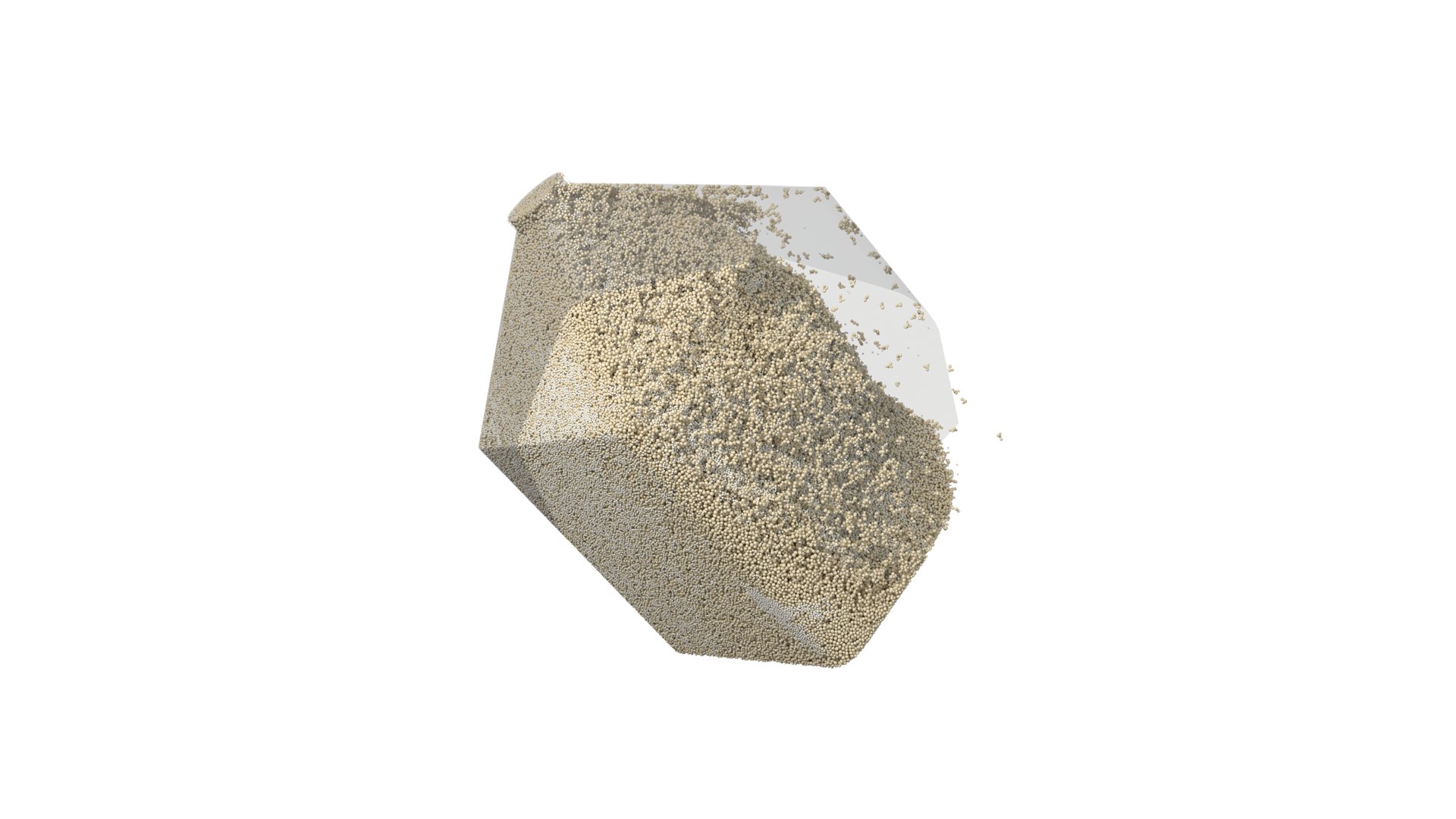
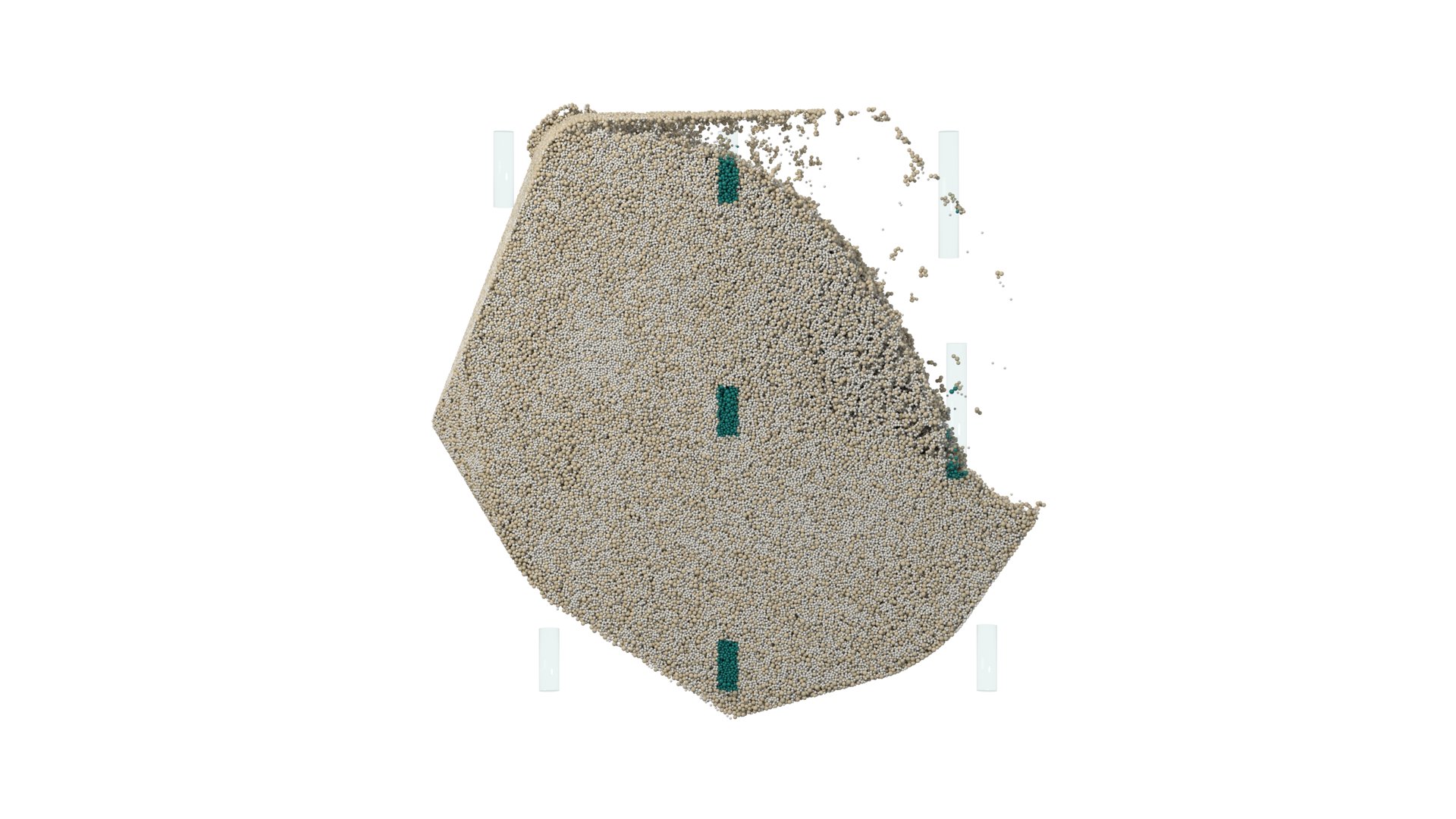
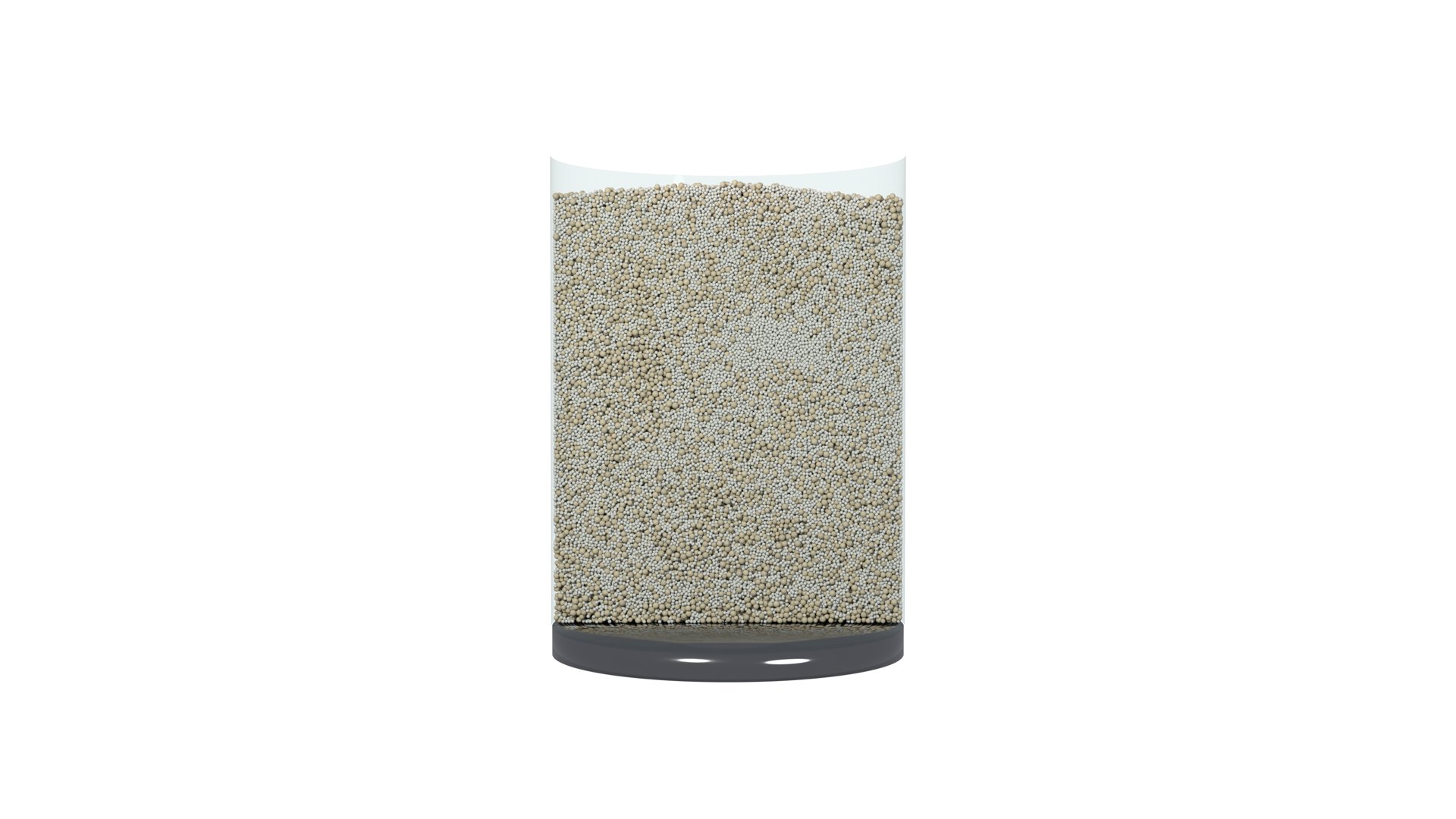
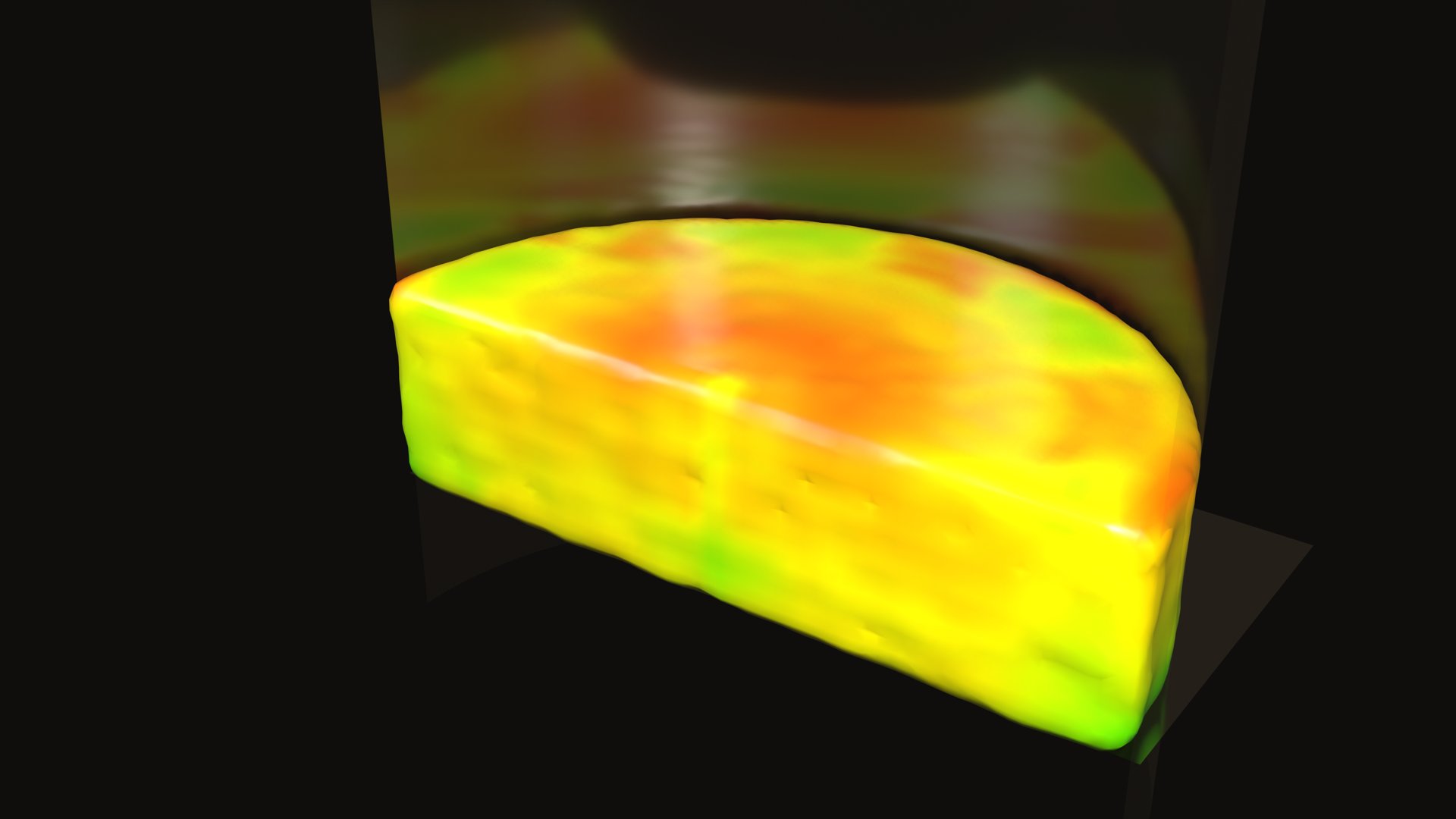
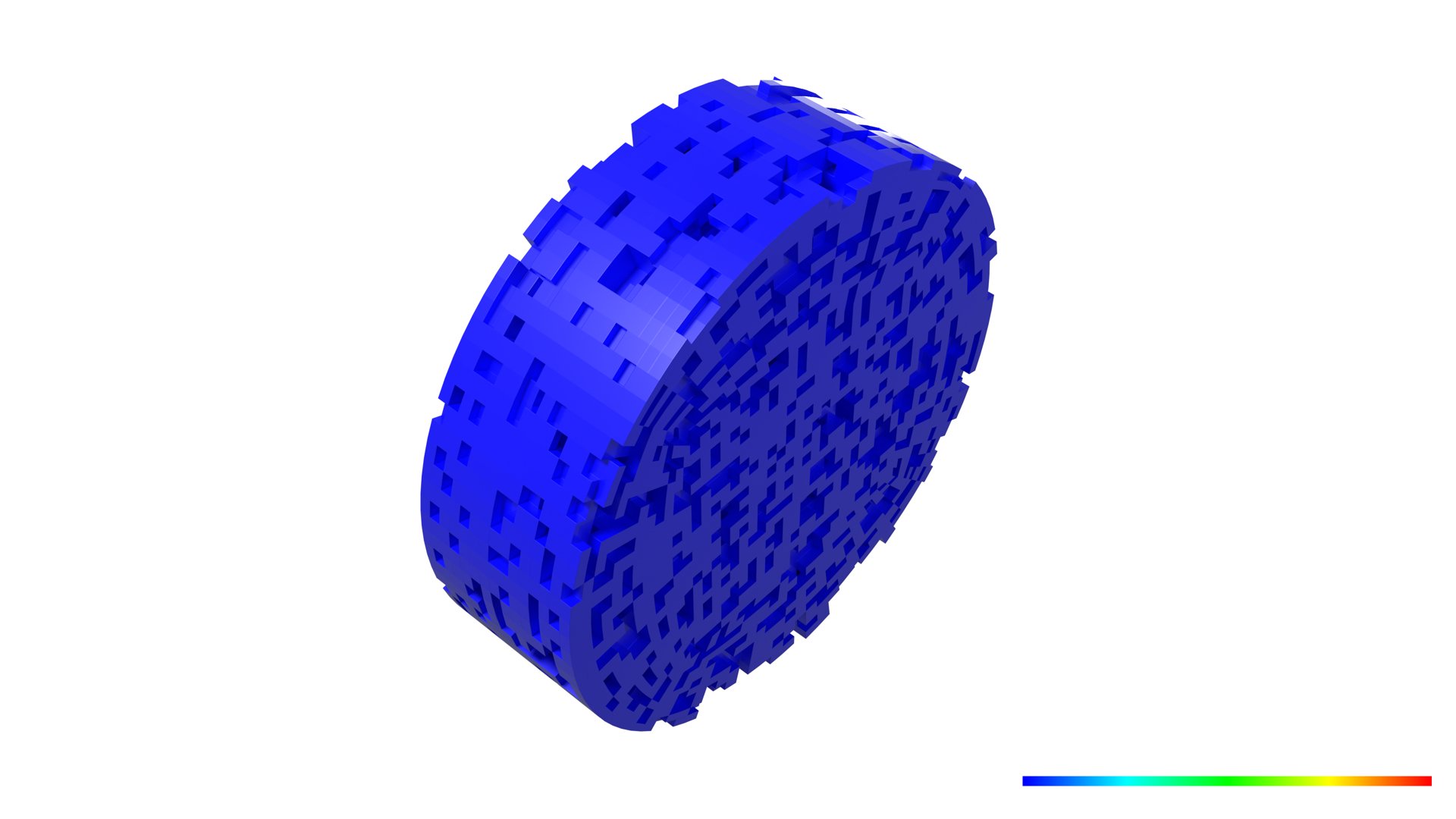
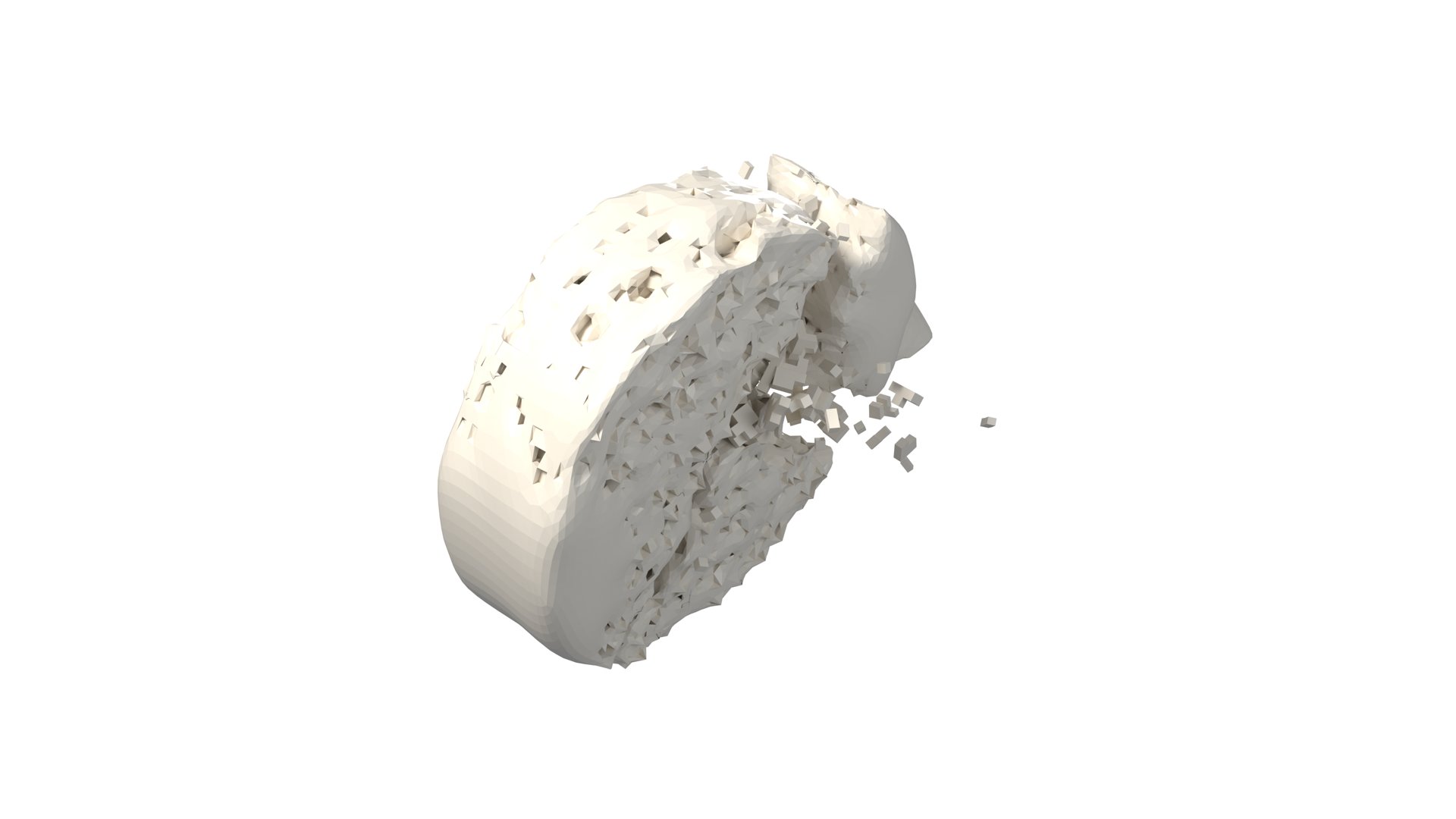
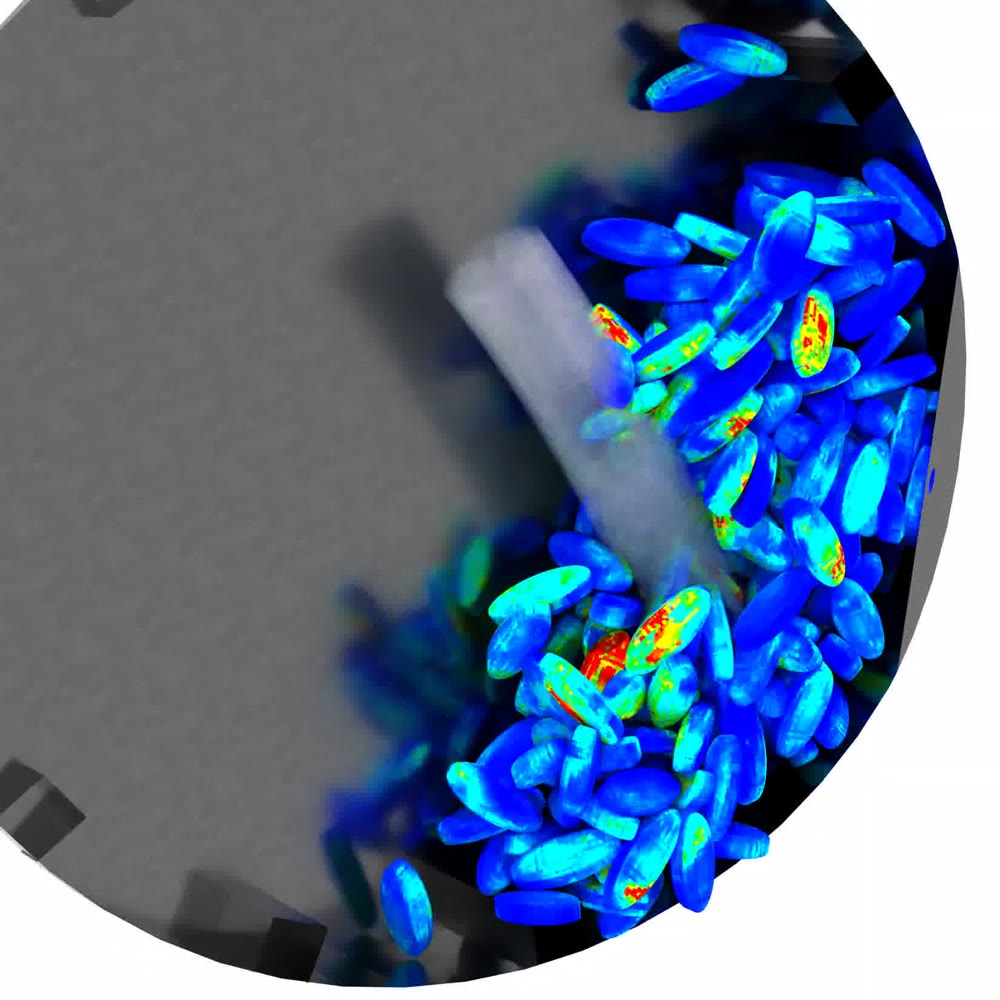
Every image is from a run of the chain.
The DEM mixer resolves the fines as particles, not only the granules, at a realistic size ratio of fines to granules. The particle sizes are scaled with the mixer; the ratio is what is kept.
Lubricant and glidant are carried on the particles. Finer fines can be handled as a particle field, described on the BlazeMultiPhysics page.
A dose sample is cut from the blend with whole clumps kept, and mass and the carried excipients are kept through every step, from the cut to the tablet.
The powder is pressed as a continuum for the density and stress field in the die. The density varies through the compact as in the fill. Stress in the powder, low (blue) to high (red), one colour scale in the three images.
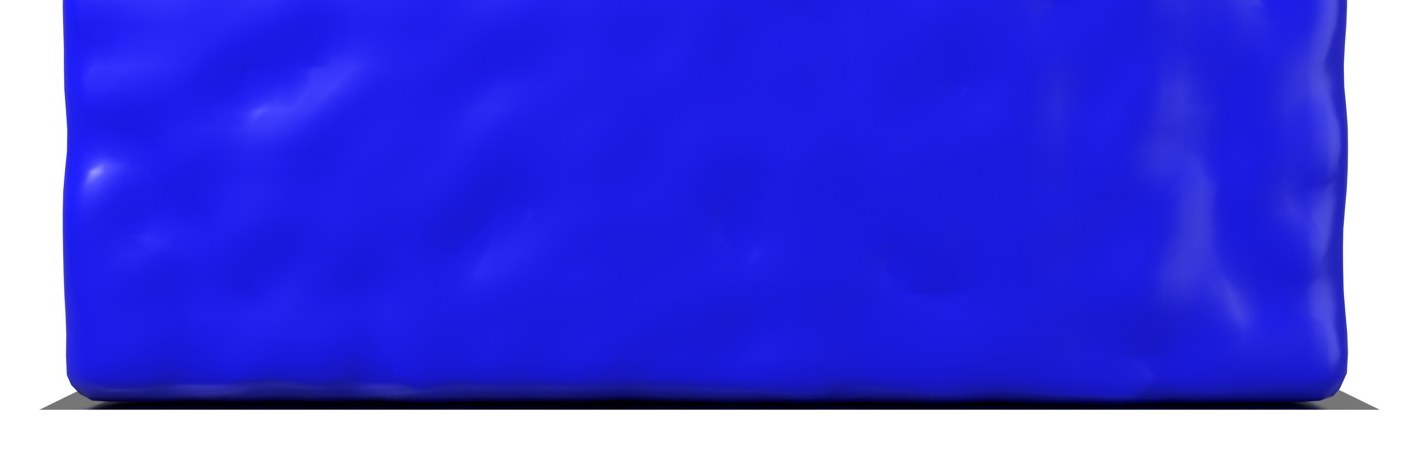
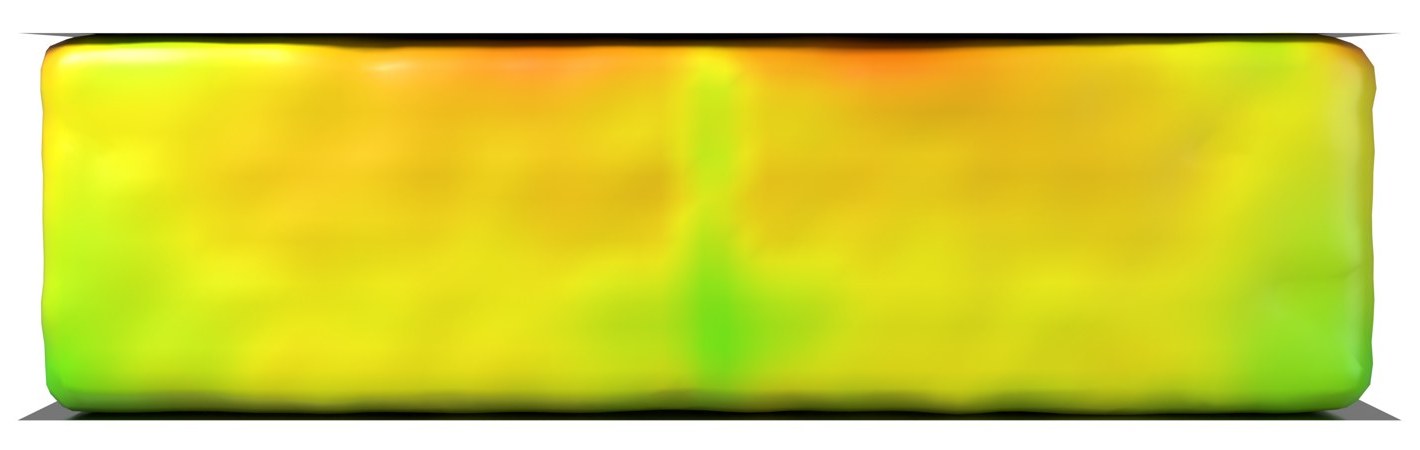
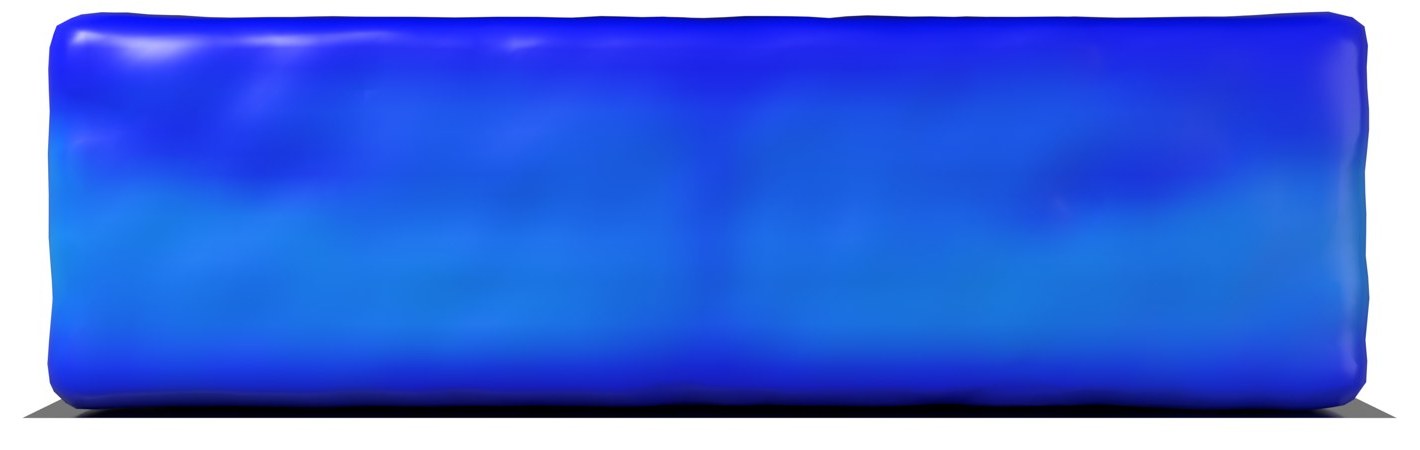
The compact becomes a tablet of bonded solid elements with the porosity of the compact. It is pushed out of the die intact and breaks in the diametral strength test. Elements are coloured by von Mises stress, one fixed range in the two test images.
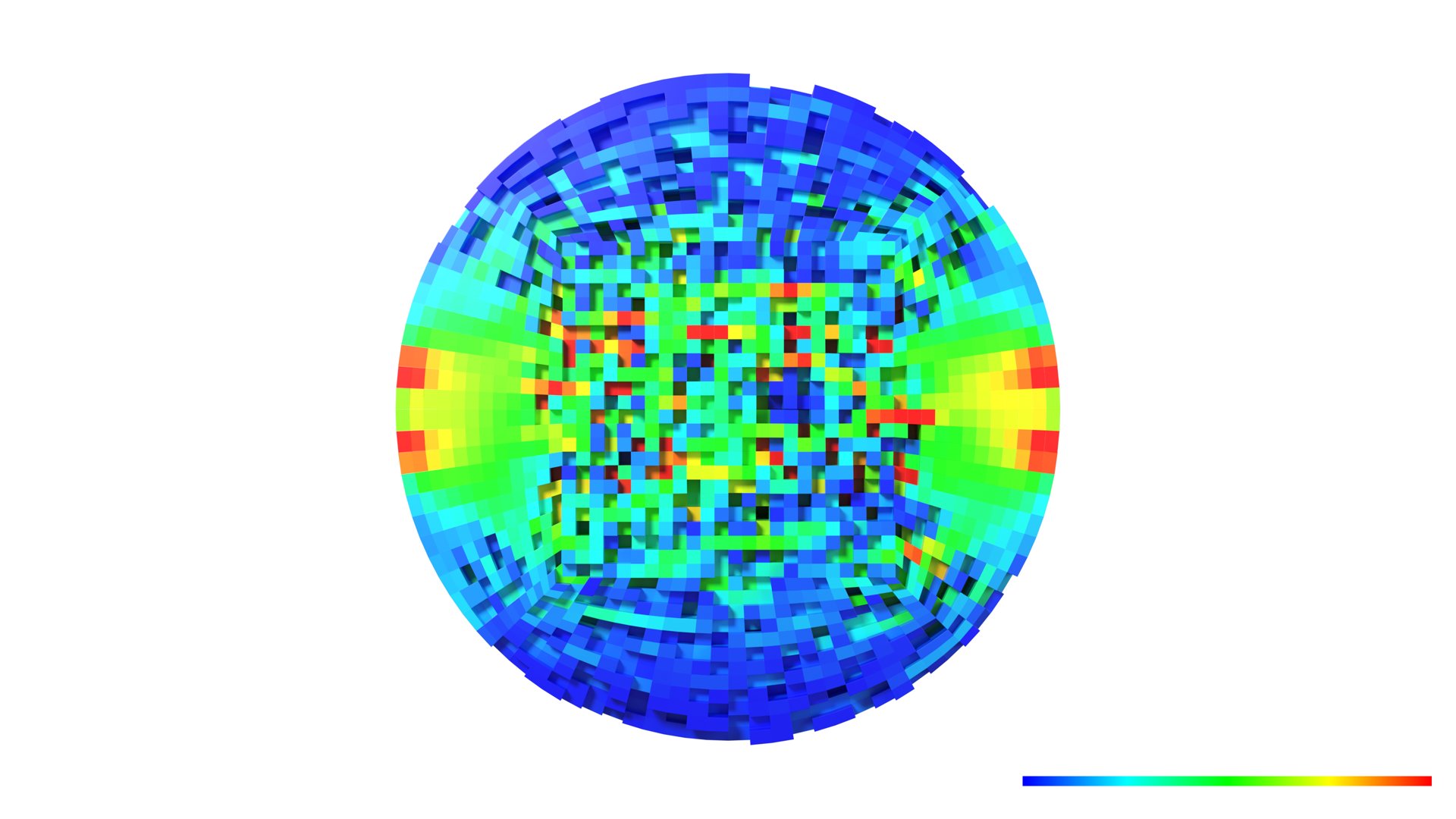
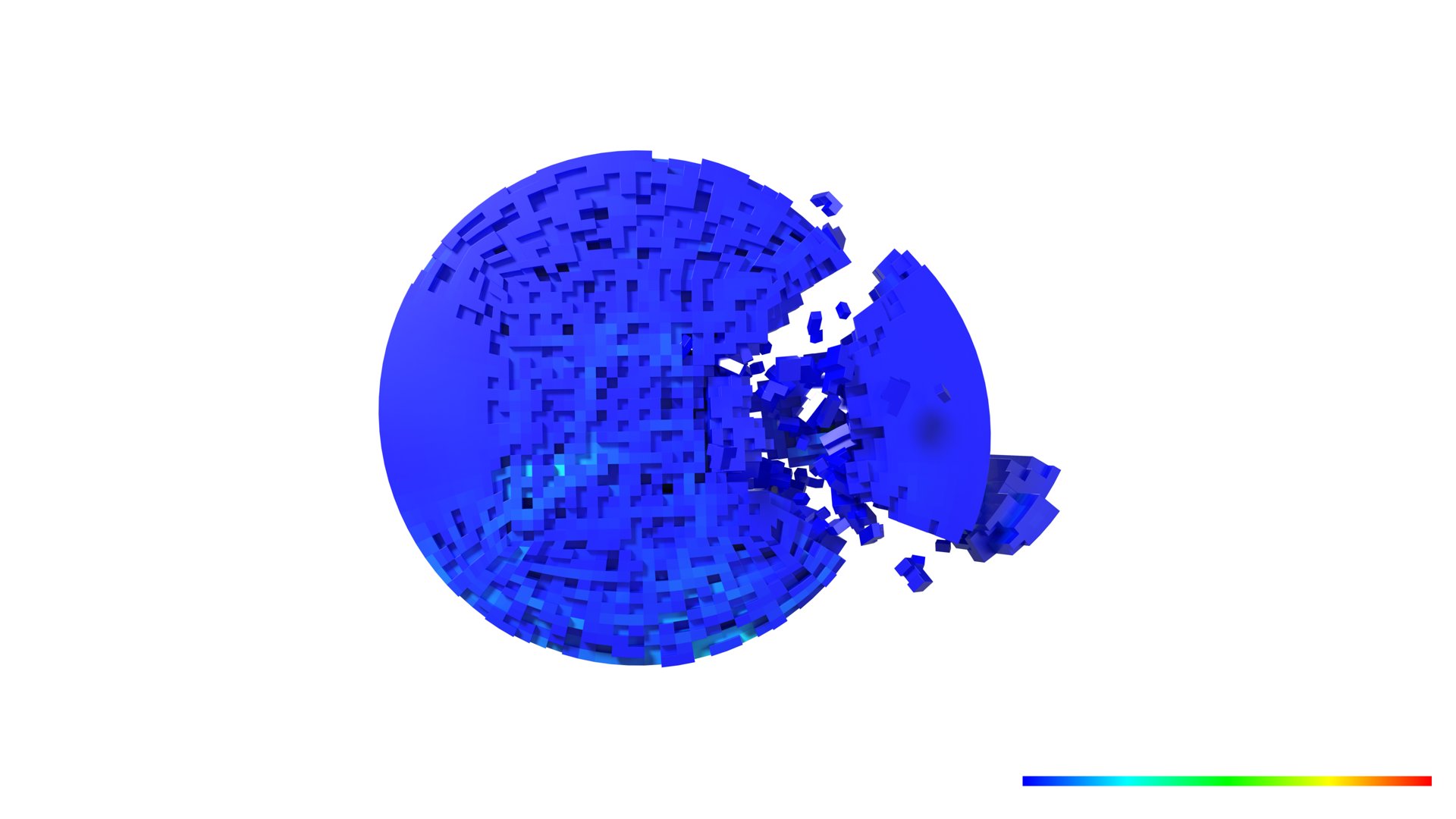
Lubricant coverage from the blend can map onto strength classes in the tablet. At the lubricant level of this blend the strength stays nearly uniform.
The model is calibrated once on one compact and then checked without refitting: the axial stiffness and the diametral strength agree with published data for MCC tablets (Kadiri et al. 2005, compaction; Razavi et al. 2014, tensile strength fit). The tablet leaves the die intact, and the die and punch forces follow the expected friction behaviour.
The tablet is a bonded solid, so it can be put into any later process and evaluated there. The coating drum is one: bonded Element tablets tumble in a baffled drum while an SPH spray wets them.
The coating collected on each tablet surface is tracked, so the spread of coating between the tablets can be seen as they tumble through the spray.
The demonstration uses caplet shaped tablets, a different shape from the disc tablet above. Coating settings such as the spray and the drum speed are settings the chain can carry.
Because every step runs in one code with fixed material properties, the chain runs become training data. The complete product is the chain plus a model trained on its runs.
Granulation: binder and drum. Mixer: time, lubricant, glidant. Die fill: dose and fill pattern. Compaction: punch force and speed. Coating: spray and drum speed.
Granulation, mixer, die fill, compaction and tablet in one code, with the bonded tablet available for coating. Each run hands its state to the next step, so every run is a complete record from setting to tablet.
Trained on the chain runs. It links a setting at any step to the strength of the final tablet, with its uncertainty, and suggests the next runs.
Ask what a process change does to the tablet before the press trial, from a model that knows the physics of every step.